English
 Español
 tiếng việt
 русский
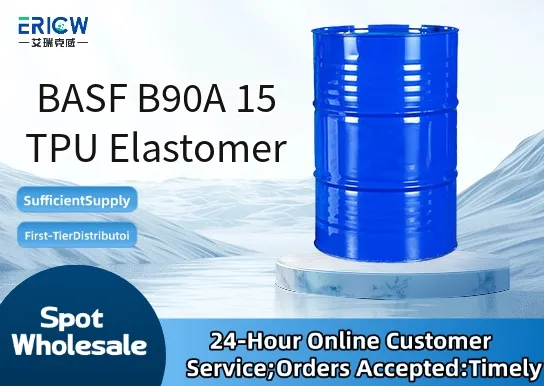
Excellent abrasion resistance for extended service life in demanding mechanical environments.
High elasticity and recovery performance with low permanent set after deformation.
Good processability via injection molding and extrusion due to optimized melt flow behavior.
Enhanced hydrolytic stability compared to conventional polyester-based TPUs.
Consistent batch-to-batch quality supported by BASF’s stringent polymer manufacturing controls.
Automotive interior trim components including gear knobs, armrest covers, and decorative overlays.
Consumer electronics protective casings and soft-touch overmolded grips.
Industrial hoses and pneumatic tubing requiring flexibility and pressure resilience.
Footwear midsoles and outsole compounds where energy return and wear resistance are critical.
Medical device housings and ergonomic handles compliant with ISO 10993 biocompatibility guidelines (subject to final formulation validation).
| Chemical Type | Thermoplastic Polyurethane (TPU), polyether-based |
| Product Form | Pellets |
| Appearance | Off-white to light beige, free-flowing granules |
| Density (ISO 1183) | 1.16–1.18 g/cm³ |
| Melt Flow Index (ISO 1133, 230 °C/5 kg) | 12–16 g/10 min |
| Hardness (Shore A, ISO 868) | 90 ± 2 |
| Tensile Strength (ISO 37) | 38–42 MPa |
| Elongation at Break (ISO 37) | 480–520 % |
Q1: What is the primary application segment for BASF B90A 15 TPU Elastomer?
A: BASF B90A 15 is a thermoplastic polyurethane elastomer specifically developed for demanding extrusion and injection molding applications, with strong suitability in automotive interior components, technical profiles, and flexible overmolding where balanced processability, surface quality, and mechanical resilience are required.
Q2: How does B90A 15 differ from standard aromatic TPU grades in terms of processing behavior?
A: B90A 15 features optimized melt flow and reduced thermal sensitivity compared to conventional aromatic TPUs, enabling stable extrusion at lower barrel temperatures and improved dimensional consistency during high-speed molding—particularly beneficial for thin-walled or complex geometries.
Q3: Is B90A 15 suitable for applications requiring resistance to common automotive fluids?
A: Yes, B90A 15 exhibits good resistance to oils, greases, and non-polar solvents typically encountered in under-hood and interior automotive environments, though long-term exposure to aggressive brake fluids or concentrated acids should be evaluated case-by-case through application-specific testing.
Q4: Can B90A 15 be processed on standard thermoplastic equipment without modification?
A: Yes, B90A 15 is fully compatible with conventional injection molding machines and single-screw extruders designed for thermoplastics. Pre-drying is recommended to maintain optimal melt stability and surface finish, and standard screw geometries used for engineering thermoplastics generally deliver satisfactory results.
Contact With Us:
E-mail: wangxingqiang@ericwchem.com
Have a Questions? Call Us:
Add:
Building A1, Jiete Industrial Park, Huangpu District, Guangzhou City, Guangdong Province, China