English
 Español
 tiếng việt
 русский
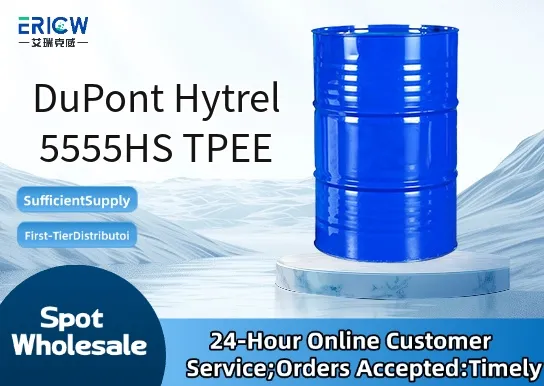
High-temperature resistance with continuous use up to 150 °C
Excellent fatigue resistance and long-term dynamic performance
Outstanding chemical resistance to oils, greases, and many automotive fluids
Good low-temperature flexibility down to –40 °C
Easy processing via injection molding and extrusion without drying
Automotive air ducts and charge air coolers
Fuel system components including fuel lines and quick-connect fittings
Industrial power transmission belts and timing belt covers
Oil and gas downhole tool seals and protective sleeves
High-performance sporting goods components requiring durability and rebound
| Chemical Type | Thermoplastic Polyester Elastomer (TPEE) |
| Product Form | Pellets |
| Appearance | Off-white to light tan, free-flowing pellets |
| Primary Applications | Dynamic sealing, fluid handling, high-heat structural parts |
| Key Features | Heat resistance, hydrolysis stability, mechanical resilience |
| Benefits | Extended service life in demanding thermal/chemical environments |
| Processing Methods | Injection molding, extrusion, blow molding |
| Regulatory Compliance | Meets UL 94 HB; RoHS compliant |
Q1: What distinguishes Hytrel 5555HS from other grades in the Hytrel TPEE family?
A: Hytrel 5555HS is a high-strength, heat-stabilized thermoplastic elastomer engineered for enhanced long-term performance at elevated temperatures and under dynamic mechanical stress. It offers improved retention of tensile properties after thermal aging compared to standard Hytrel grades, making it particularly suitable for demanding automotive and industrial applications where dimensional stability and fatigue resistance are critical.
Q2: Is Hytrel 5555HS compatible with common engineering thermoplastics for co-molding or overmolding?
A: Yes, Hytrel 5555HS exhibits good adhesion to a range of engineering resins—including polypropylene, ABS, and certain nylons—when processed under optimized temperature, pressure, and surface preparation conditions. Successful bonding typically requires careful control of melt temperature differentials and interfacial residence time during two-shot molding.
Q3: How does processing Hytrel 5555HS differ from standard Hytrel grades?
A: Hytrel 5555HS benefits from a slightly higher recommended melt processing window—typically 230–270 °C—to ensure full activation of its heat-stabilized morphology. Drying is essential prior to processing (e.g., 4–6 hours at 60–80 °C under dehumidified air), and mold temperatures should be maintained above 40 °C to support optimal crystallinity development and surface quality.
Q4: Can Hytrel 5555HS be used in applications requiring repeated flexing or cyclic loading?
A: Yes—its balanced polyester-ether architecture provides excellent fatigue resistance and recovery after repeated deformation. It is widely selected for dynamic components such as CV joint boots, suspension bushings, and flexible couplings where long-term resilience and low hysteresis loss are required.
Contact With Us:
E-mail: wangxingqiang@ericwchem.com
Have a Questions? Call Us:
Add:
Building A1, Jiete Industrial Park, Huangpu District, Guangzhou City, Guangdong Province, China