English
 Español
 tiếng việt
 русский
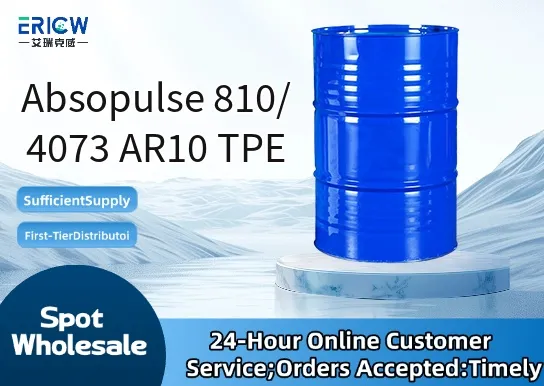
Thermoplastic elastomer (TPE) formulation offering excellent processability via injection molding and extrusion.
Enhanced abrasion resistance and long-term flex fatigue performance for dynamic sealing applications.
Good adhesion to polypropylene (PP) and polyethylene (PE) substrates without primer or surface treatment.
Low extractables profile suitable for applications requiring compliance with FDA 21 CFR §177.2600 (indirect food contact).
UV-stabilized grade providing improved retention of mechanical properties under outdoor exposure conditions.
Soft-touch overmolding for automotive interior trim components.
Sealing gaskets and caps for consumer electronics enclosures.
Flexible tubing and connectors in medical device assemblies (non-implantable, non-invasive).
Grip-enhancing handles for power tools and garden equipment.
Weather-resistant seals for outdoor lighting housings and smart home sensors.
| Chemical Type | Thermoplastic Elastomer (TPE) – Styrenic Block Copolymer (SBC) based |
| Product Form | Pellets |
| Appearance | Off-white, free-flowing granules |
| Shore A Hardness (ASTM D2240) | 40 ± 3 |
| Melt Flow Rate (230°C/2.16 kg, ASTM D1238) | 22–28 g/10 min |
| Density (ASTM D792) | 0.90–0.92 g/cm³ |
| Key Features | Overmoldable, UV-stabilized, low-extractables, PP/PE bondable |
| Compliance | FDA 21 CFR §177.2600 (indirect food contact), RoHS 2015/863/EU compliant |
Q1: What is the primary function of Absopulse 810/4073 AR10 TPE in thermoplastic elastomer formulations?
A: Absopulse 810/4073 AR10 TPE functions as a high-performance processing aid and rheology modifier, enhancing melt flow uniformity, reducing extrusion pressure, and improving surface finish in TPE compounds—particularly in styrenic (TPE-S) and thermoplastic polyolefin (TPO) systems.
Q2: Is Absopulse 810/4073 AR10 TPE compatible with common TPE base polymers such as SEBS, TPS, and TPV?
A: Yes—it demonstrates broad compatibility with major TPE matrix resins including SEBS, SBS, and dynamically vulcanized TPVs. Compatibility is typically confirmed through melt blending trials and visual assessment of phase dispersion and gel formation.
Q3: How should Absopulse 810/4073 AR10 TPE be incorporated into a TPE compound?
A: It is recommended for direct addition during the compounding stage—typically via side-feeder or gravimetric dosing—under standard twin-screw extrusion conditions. Pre-drying is not required, but consistent feeding and adequate residence time ensure optimal dispersion.
Q4: Does Absopulse 810/4073 AR10 TPE affect the final mechanical properties of TPE parts?
A: When used within typical dosage ranges, it generally maintains key mechanical attributes such as tensile strength and elongation at break while significantly improving processability. Minor adjustments to formulation may be needed to fine-tune hardness or elasticity depending on application requirements.
Contact With Us:
E-mail: wangxingqiang@ericwchem.com
Have a Questions? Call Us:
Add:
Building A1, Jiete Industrial Park, Huangpu District, Guangzhou City, Guangdong Province, China