English
 Español
 tiếng việt
 русский
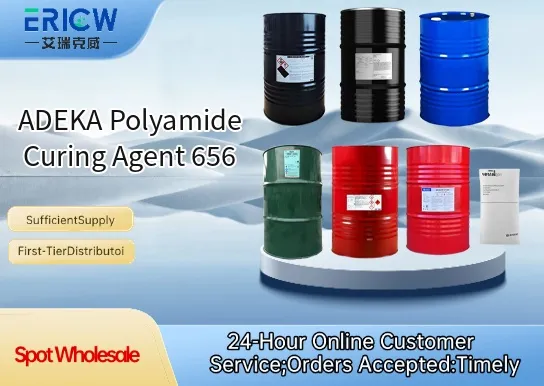
Excellent flexibility and impact resistance in cured epoxy systems.
Low viscosity enables easy handling and improved compatibility with epoxy resins.
Good chemical resistance, particularly to alkalis and solvents.
Room-temperature curing capability without requiring elevated temperatures.
Low odor and low volatility, supporting safer industrial handling and compliance with VOC regulations.
Industrial maintenance coatings for steel structures and pipelines.
Marine antifouling and protective coatings for ship hulls and offshore platforms.
Epoxy flooring systems in warehouses, garages, and cleanroom facilities.
Adhesives and sealants for metal-to-metal and metal-to-composite bonding.
Electrical insulation compounds for transformers and busbar encapsulation.
| Chemical Type | Polyamide adduct |
| Product Form | Liquid |
| Appearance | Amber to brown transparent liquid |
| Viscosity (25°C) | 1,200–1,800 mPa·s |
| Amine Value | 240–270 mg KOH/g |
| Color (Gardner) | ≤8 |
| Flash Point | ≥120°C (closed cup) |
| Storage Stability | Stable for ≥12 months at 5–30°C in sealed containers |
Q1: What is the primary function of ADEKA Polyamide Curing Agent 656 in epoxy systems?
A: It functions as a room-temperature or low-temperature curing agent for epoxy resins, enabling the formation of durable, chemically resistant thermoset networks—particularly valued for its flexibility, adhesion to diverse substrates, and balanced pot life/workability.
Q2: Is ADEKA 656 suitable for food-contact or potable water applications?
A: While ADEKA 656 is used in industrial protective coatings and adhesives, it is not pre-qualified for direct food-contact or potable water applications. End-use compliance must be verified through full formulation testing and regulatory assessment by the final product manufacturer.
Q3: How does ADEKA 656 compare to conventional aliphatic polyamide curing agents in terms of viscosity and handling?
A: ADEKA 656 exhibits lower viscosity than many standard polyamide curing agents, which facilitates easier mixing with epoxy resins, improved pigment wetting, and reduced need for reactive diluents—contributing to higher solids content formulations.
Q4: What storage conditions are recommended to maintain stability?
A: Store in tightly sealed containers under dry, cool conditions (preferably below 30 °C) and protect from moisture and prolonged exposure to air to prevent viscosity increase or gelation over time.
Contact With Us:
E-mail: wangxingqiang@ericwchem.com
Have a Questions? Call Us:
Add:
Building A1, Jiete Industrial Park, Huangpu District, Guangzhou City, Guangdong Province, China