English
 Español
 tiếng việt
 русский
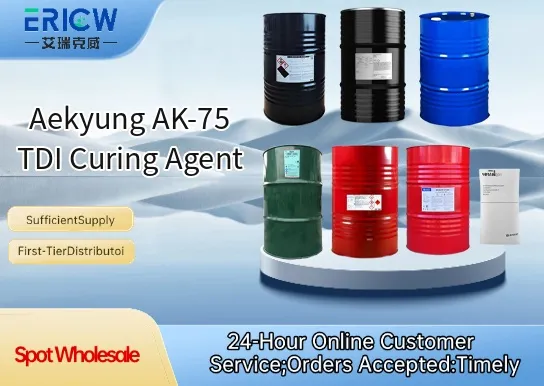
High reactivity with hydroxyl-functional resins for rapid cure development.
Excellent compatibility with polyester, acrylic, and polyether polyols.
Low viscosity formulation enabling easy handling and uniform mixing.
Consistent batch-to-batch performance ensured by strict manufacturing controls.
Optimized for ambient and forced-dry curing systems in industrial coatings.
Automotive OEM and refinish topcoats.
Industrial maintenance and coil coatings.
General-purpose high-performance polyurethane coatings.
Wood finishing systems requiring hardness and chemical resistance.
Plastic coatings for durable consumer electronics housings.
| Chemical Type | TDI-based polyisocyanate (trimerized) |
| Product Form | Liquid |
| Appearance | Clear to pale yellow liquid |
| Primary Applications | Polyurethane coating systems |
| Key Features | Fast-curing, low-VOC compatible, non-blocking |
| Benefits | Enhanced film hardness, improved chemical resistance, reduced pot life sensitivity |
| Storage Condition | Store below 30°C in tightly sealed containers, protect from moisture |
| Shelf Life | 12 months from date of manufacture under recommended storage |
Q1: What is the primary chemical nature of AK-75, and how does it differ from aliphatic curing agents?
A: AK-75 is an aromatic polyisocyanate-based curing agent derived from toluene diisocyanate (TDI), offering higher reactivity and stronger crosslink density compared to aliphatic alternatives. Its aromatic structure contributes to enhanced mechanical strength and thermal resistance in cured films, though it may exhibit yellowing under UV exposure.
Q2: Which resin systems is AK-75 typically compatible with?
A: AK-75 is primarily formulated for use with hydroxyl-functional acrylics, polyesters, and alkyds in two-component polyurethane coatings. It is not recommended for use with highly moisture-sensitive or low-reactivity resins without prior compatibility testing.
Q3: How should AK-75 be handled and stored to maintain stability and performance?
A: Store in tightly sealed containers under dry, cool conditions (below 30 °C) and protect from moisture, heat, and direct sunlight. Exposure to ambient humidity may cause gelation or viscosity increase due to premature reaction with water. Always use dry handling equipment and avoid repeated container opening.
Q4: What are key safety considerations when working with AK-75?
A: As a TDI-derived isocyanate, AK-75 poses inhalation and dermal sensitization risks. Use appropriate PPE—including respirators with organic vapor cartridges, nitrile gloves, and eye protection—and ensure adequate ventilation. Avoid skin contact and follow established occupational exposure guidelines for isocyanates.
Contact With Us:
E-mail: wangxingqiang@ericwchem.com
Have a Questions? Call Us:
Add:
Building A1, Jiete Industrial Park, Huangpu District, Guangzhou City, Guangdong Province, China