English
 Español
 tiếng việt
 русский
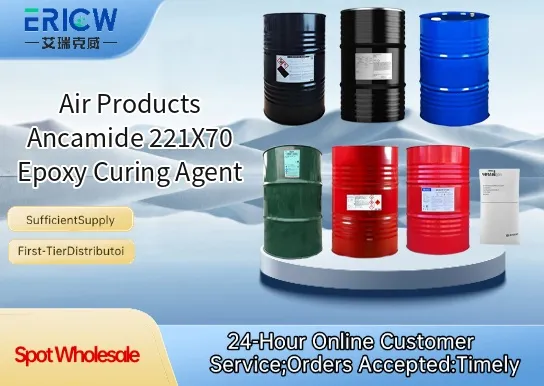
Low-viscosity polyamine-based curing agent enabling excellent flow and wetting of substrates.
Room-temperature curable system with balanced reactivity—reducing pot life constraints while maintaining practical working time.
Delivers high crosslink density for superior chemical resistance, hardness, and thermal stability in cured epoxy networks.
Compatible with standard bisphenol-A and bisphenol-F epoxy resins without requiring solvents or diluents.
Low volatility and low odor profile, supporting safer handling and improved workplace air quality.
Industrial flooring and heavy-duty concrete coatings requiring abrasion and chemical resistance.
Electrical encapsulation and potting compounds for transformers, busbars, and power electronics.
Adhesives and structural bonding systems in transportation and wind energy components.
Marine and offshore protective coatings for steel infrastructure exposed to saltwater and UV environments.
Composite matrix resins for filament-wound tanks, pipes, and pressure vessels.
| Chemical Type | Polyoxyalkylene polyamine |
| Product Form | Liquid |
| Appearance | Clear to pale yellow liquid |
| Primary Applications | Epoxy coating, adhesive, and composite systems |
| Key Features | Room-temperature cure, low viscosity, high amine hydrogen equivalent weight (AHEW) |
| Benefits | Improved toughness, reduced exotherm, enhanced moisture tolerance during cure |
| Storage Stability | Stable under dry, cool conditions (≤25°C); protect from moisture and freezing |
| Regulatory Compliance | REACH registered; not classified as hazardous per GHS (as supplied) |
Q1: What is the primary chemical nature of Ancamide 221X70?
A: Ancamide 221X70 is a modified aliphatic polyamine epoxy curing agent, designed to offer balanced reactivity, low viscosity, and reduced volatility compared to conventional amine hardeners.
Q2: How does Ancamide 221X70 perform in moisture-sensitive or high-humidity environments?
A: Due to its modified molecular structure, Ancamide 221X70 exhibits lower sensitivity to ambient moisture than many standard aliphatic amines—supporting more consistent cure performance during application in moderate humidity conditions, though proper substrate preparation and environmental control remain essential.
Q3: Is Ancamide 221X70 suitable for applications requiring low-temperature cure?
A: Yes—it delivers reliable reactivity at temperatures as low as 10–15 °C, making it well-suited for industrial maintenance coatings and flooring systems where ambient-cure capability below room temperature is needed.
Q4: What types of epoxy resins is Ancamide 221X70 typically formulated with?
A: It is broadly compatible with standard liquid bisphenol-A and bisphenol-F epoxy resins, as well as some cycloaliphatic epoxies—commonly used in high-performance coatings, adhesives, and composites where toughness and chemical resistance are prioritized.
Q5: How should Ancamide 221X70 be handled and stored to maintain stability?
A: Store in tightly sealed containers under dry, cool conditions away from direct sunlight and strong oxidizers. Minimize exposure to air and moisture during handling, as prolonged contact may lead to gradual viscosity increase or surface skinning.
Contact With Us:
E-mail: wangxingqiang@ericwchem.com
Have a Questions? Call Us:
Add:
Building A1, Jiete Industrial Park, Huangpu District, Guangzhou City, Guangdong Province, China