English
 Español
 tiếng việt
 русский
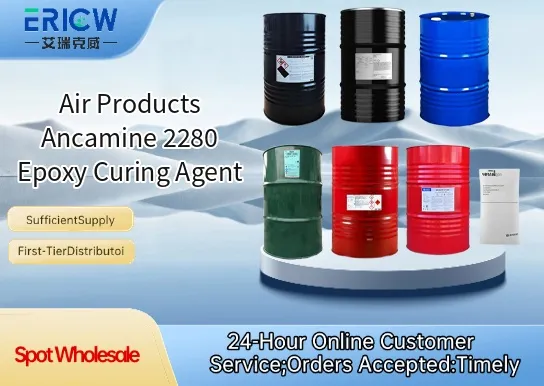
Fast-reacting aliphatic amine curing agent enabling rapid cure at ambient temperatures.
Low viscosity for excellent flow, wetting, and ease of handling in resin systems.
Low odor and reduced volatility compared to traditional aliphatic amines, supporting safer workplace conditions.
Provides high mechanical strength, chemical resistance, and adhesion to diverse substrates.
Compatible with standard DGEBA-type epoxy resins without requiring solvents or modifiers.
Industrial flooring and concrete repair mortars requiring fast turnaround.
Structural adhesives for automotive and transportation assembly.
Electrical potting and encapsulation compounds demanding low exotherm and reliable dielectric performance.
High-performance coatings for metal and concrete in infrastructure and marine environments.
Composite matrix resins for wind energy components and pultruded profiles.
| Chemical Type | Aliphatic polyamine |
| Product Form | Liquid |
| Appearance | Clear, light amber liquid |
| Primary Applications | Ambient-cure epoxy coatings, adhesives, mortars, and composites |
| Key Features | Fast ambient cure, low viscosity, low odor, solvent-free |
| Benefits | Improved worker safety, reduced cycle times, enhanced interfacial adhesion |
| Storage Stability | 12 months unopened at 20–25°C |
| Reactivity Profile | Reacts readily with bisphenol-A epoxy resins at 20–30°C |
Q1: What is the primary chemical class of Ancamine 2280?
A: Ancamine 2280 is a modified aliphatic amine curing agent, designed to provide balanced reactivity, low volatility, and improved handling characteristics compared to traditional amine hardeners.
Q2: Is Ancamine 2280 suitable for ambient-cure epoxy systems?
A: Yes — it is formulated to enable efficient curing at room temperature, making it well-suited for coatings, adhesives, and composite applications where elevated oven cure is not feasible or desired.
Q3: How does Ancamine 2280 compare to standard DETA or TETA in terms of amine blush and surface tack?
A: Due to its modified structure, Ancamine 2280 exhibits reduced tendency toward amine blush and surface tack under humid conditions, supporting better intercoat adhesion and finish quality in multi-layer applications.
Q4: Can Ancamine 2280 be used in high-solids or solvent-free epoxy formulations?
A: Yes — it is compatible with low-VOC and 100% solids epoxy resins, and its viscosity and reactivity profile support formulating robust, high-build systems without compromising pot life or film integrity.
Contact With Us:
E-mail: wangxingqiang@ericwchem.com
Have a Questions? Call Us:
Add:
Building A1, Jiete Industrial Park, Huangpu District, Guangzhou City, Guangdong Province, China