English
 Español
 tiếng việt
 русский
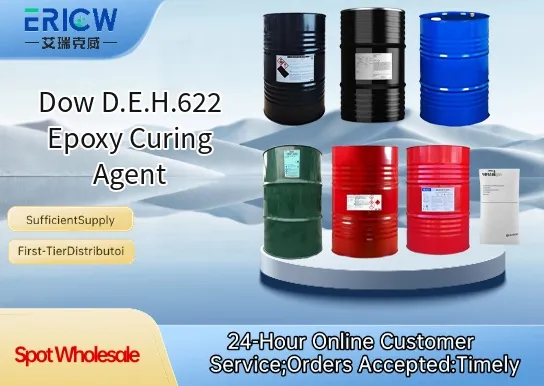
Highly reactive aliphatic amine curing agent for fast ambient-cure epoxy systems.
Low viscosity enables easy handling, metering, and uniform mixing with epoxy resins.
Excellent adhesion to metals, composites, and concrete substrates.
Good chemical resistance after full cure, including resistance to moisture and mild solvents.
Low odor and reduced volatility compared to traditional aromatic amines, supporting safer workplace handling.
Structural adhesives for aerospace and automotive bonding.
Protective coatings for industrial flooring and marine equipment.
Electrical encapsulants and potting compounds for electronics.
Repair mortars and polymer-modified grouts for infrastructure rehabilitation.
Composite matrix resins in wind blade and sporting goods manufacturing.
| Chemical Type | Aliphatic polyamine |
| Product Form | Liquid |
| Appearance | Clear, pale yellow liquid |
| Primary Applications | Ambient-cure structural adhesives, protective coatings, encapsulants |
| Key Features | Fast reactivity, low viscosity, low volatility, excellent adhesion |
| Benefits | Shorter cycle times, improved worker safety, enhanced interfacial bond strength |
| Storage Stability | 12 months unopened at 20–25°C |
| Compatibility | Compatible with standard bisphenol-A and bisphenol-F epoxy resins |
Q1: What is the primary chemical nature of D.E.H.622?
A: D.E.H.622 is an aliphatic polyamine-based epoxy curing agent, designed to provide rapid ambient-cure reactivity with standard bisphenol-A and bisphenol-F epoxy resins.
Q2: Is D.E.H.622 suitable for coatings requiring low-temperature cure performance?
A: Yes — it is formulated to deliver effective crosslinking at temperatures as low as 10–15°C, making it well-suited for industrial maintenance coatings and field-applied systems where elevated oven curing is not feasible.
Q3: How does D.E.H.622 compare to aromatic amine curing agents in terms of yellowing resistance?
A: As an aliphatic polyamine, D.E.H.622 offers significantly improved UV and thermal stability compared to aromatic amines, resulting in superior resistance to yellowing and discoloration in clear or light-colored epoxy systems.
Q4: What are typical handling considerations for D.E.H.622?
A: It is moisture-sensitive and should be stored under dry, inert conditions; users are advised to minimize exposure to ambient humidity during handling and maintain sealed containers when not in use. Personal protective equipment, including gloves and eye protection, is recommended due to its amine functionality.
Q5: Can D.E.H.622 be used in formulations requiring FDA-compliant food-contact epoxy systems?
A: D.E.H.622 is not pre-qualified for direct food-contact applications under FDA 21 CFR or similar regulatory frameworks; formulators must conduct full regulatory evaluation and validation for any intended food-contact use.
Contact With Us:
E-mail: wangxingqiang@ericwchem.com
Have a Questions? Call Us:
Add:
Building A1, Jiete Industrial Park, Huangpu District, Guangzhou City, Guangdong Province, China