English
 Español
 tiếng việt
 русский
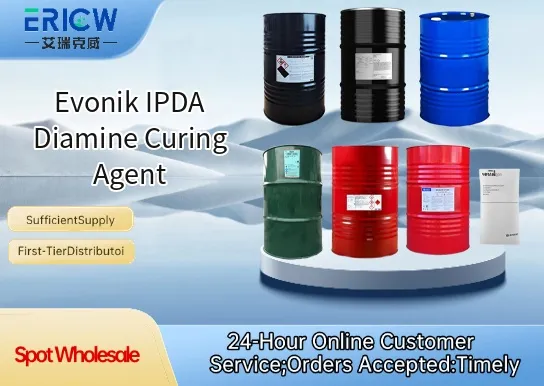
Fast-reacting aliphatic diamine offering short gel times and rapid development of mechanical properties.
Excellent low-temperature reactivity, enabling efficient curing even at ambient or sub-ambient conditions.
Provides superior chemical resistance and thermal stability in cured epoxy systems.
Low viscosity and high amine hydrogen equivalent weight support easy handling and formulation flexibility.
Produces tough, impact-resistant coatings and composites with low color formation and minimal blush.
High-performance protective coatings for industrial steel structures and marine environments.
Structural adhesives requiring rapid strength build-up and excellent substrate adhesion.
Electrical encapsulation and potting compounds for demanding electronic and power applications.
Fiber-reinforced polymer (FRP) composites used in wind energy, automotive, and aerospace components.
Self-leveling flooring systems where fast return-to-service and abrasion resistance are critical.
| Chemical Type | Aliphatic diamine (Isophoronediamine) |
| Product Form | Liquid |
| Appearance | Colorless to pale yellow clear liquid |
| Amine Value | 410–430 mg KOH/g |
| Viscosity (25 °C) | 80–120 mPa·s |
| Density (20 °C) | 0.91–0.93 g/cm³ |
| Primary Applications | Epoxy resin curing agent for coatings, adhesives, composites, and encapsulants |
| Key Features | Fast cure, low temperature performance, low viscosity, high toughness |
Q1: What is the primary function of IPDA in epoxy systems?
A: IPDA (isophoronediamine) serves as a highly reactive aliphatic diamine curing agent for epoxy resins, delivering excellent chemical resistance, thermal stability, and mechanical strength to the cured network—particularly valued in high-performance coatings, adhesives, and composites.
Q2: How does IPDA compare to other aliphatic diamines in terms of pot life and cure speed?
A: IPDA offers a balanced reactivity profile—faster than slower-curing diamines like DETA but with longer pot life than highly reactive amines such as ethylenediamine. Its steric hindrance from the cycloaliphatic structure enables good handling time while supporting efficient room-temperature or elevated-temperature cures.
Q3: Is IPDA suitable for applications requiring low viscosity and good substrate wetting?
A: Yes—IPDA has relatively low viscosity and favorable surface tension characteristics, enabling effective mixing with liquid epoxy resins and strong interfacial adhesion on diverse substrates including metals and composites.
Q4: Can IPDA be used in food-contact or potable water applications?
A: Evonik IPDA is not pre-approved for direct food-contact or potable water applications. Formulators must conduct full regulatory evaluation—including migration testing and compliance verification—based on final cured system composition and intended use conditions.
Q5: What safety considerations apply when handling IPDA?
A: IPDA is an amine with potential skin sensitization and respiratory irritation hazards. Safe handling requires engineering controls (e.g., ventilation), personal protective equipment (gloves, goggles, respirators), and adherence to GHS labeling and SDS guidance—especially during mixing and application.
Contact With Us:
E-mail: wangxingqiang@ericwchem.com
Have a Questions? Call Us:
Add:
Building A1, Jiete Industrial Park, Huangpu District, Guangzhou City, Guangdong Province, China