English
 Español
 tiếng việt
 русский
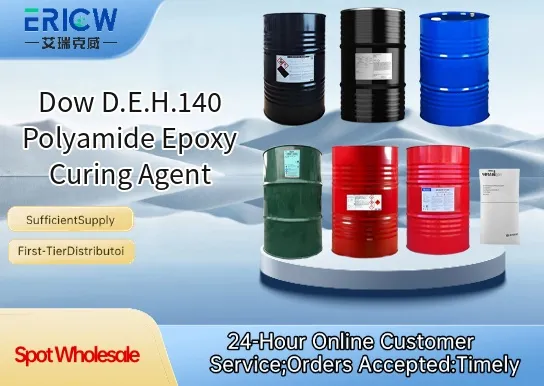
Flexible, low-viscosity polyamide chemistry enabling excellent flow and wetting on substrates.
Room-temperature curable with extended pot life for improved processing window.
Provides good chemical resistance, particularly to alkalis and solvents.
Delivers tough, impact-resistant epoxy coatings with balanced flexibility and hardness.
Compatible with standard bisphenol-A and bisphenol-F epoxy resins.
Industrial maintenance coatings for steel structures and pipelines.
Concrete floor coatings in warehouses, garages, and manufacturing facilities.
Marine and offshore protective coatings for decks and ballast tanks.
Electrical insulation systems for transformers and busbars.
Adhesives and sealants requiring ambient-cure toughness and adhesion.
| Chemical Type | Polyamide |
| Product Form | Liquid |
| Appearance | Amber to brown viscous liquid |
| Primary Applications | Ambient-cure epoxy coatings, adhesives, and sealants |
| Key Features | Room-temperature cure, flexible film formation, good substrate adhesion |
| Benefits | Extended working time, low odor, reduced VOC potential vs. amine alternatives |
| Recommended Epoxy Resin Ratio (parts by weight) | 100 parts epoxy resin : 35–45 parts D.E.H.140 |
| Storage Conditions | Store in original sealed container at 15–25°C; protect from moisture |
Q1: What is the primary function of D.E.H.140 in epoxy systems?
A: D.E.H.140 is a polyamide-based curing agent designed to react with liquid and solid epoxy resins, enabling crosslinking at ambient or elevated temperatures to form durable, chemically resistant thermoset networks.
Q2: Is D.E.H.140 suitable for high-humidity or outdoor applications?
A: Yes — its polyamide chemistry provides good moisture tolerance during cure and contributes to excellent adhesion and corrosion resistance in coatings and protective linings exposed to humid, marine, or industrial environments.
Q3: How does D.E.H.140 compare to aliphatic amine curing agents in terms of handling and safety?
A: D.E.H.140 offers lower volatility and reduced skin sensitization potential compared to many low-molecular-weight aliphatic amines, making it safer to handle in industrial settings without requiring stringent vapor control — though standard PPE and ventilation are still recommended.
Q4: Can D.E.H.140 be used in food-contact or potable water applications?
A: D.E.H.140 is not pre-qualified for direct food-contact or potable water service; formulations intended for such uses require full regulatory evaluation and approval by relevant authorities based on the final cured system’s compliance profile.
Contact With Us:
E-mail: wangxingqiang@ericwchem.com
Have a Questions? Call Us:
Add:
Building A1, Jiete Industrial Park, Huangpu District, Guangzhou City, Guangdong Province, China