English
 Español
 tiếng việt
 русский
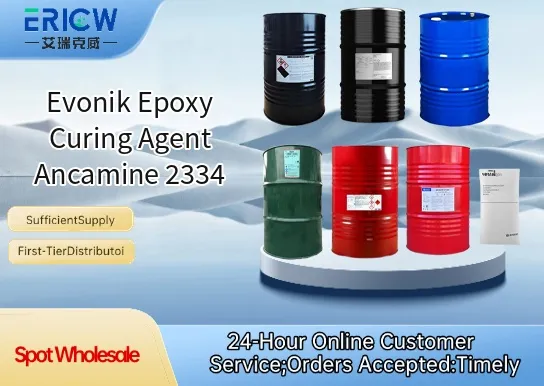
Fast-reacting aliphatic amine curing agent offering short pot life and rapid ambient-cure kinetics.
Excellent adhesion to metals, concrete, and composite substrates without primer requirement.
Low viscosity enables easy metering, mixing, and penetration into porous or fibrous reinforcements.
Good chemical resistance post-cure, particularly against alkalis, solvents, and mild acids.
Low volatility and reduced amine fume emission compared to conventional DETA-based systems.
Structural adhesives for automotive and aerospace bonding applications.
High-performance flooring and grouting systems in industrial facilities.
Electrical encapsulation and potting compounds requiring fast turnaround.
Composite repair kits and wind blade bonding formulations.
Coating systems for corrosion protection on steel infrastructure.
| Chemical Type | Aliphatic polyamine |
| Product Form | Liquid |
| Appearance | Clear, pale yellow liquid |
| Primary Applications | Structural adhesives, coatings, composites, flooring |
| Key Features | Ambient-cure, low viscosity, fast reactivity, good adhesion |
| Benefits | Reduced cycle time, improved productivity, primer-free bonding |
| Density (25°C) | 0.92–0.94 g/cm³ |
| Amine Value | 440–470 mg KOH/g |
Q1: What is the primary chemical class and functional mechanism of Ancamine 2334?
A: Ancamine 2334 is a polyetheramine-based curing agent, functioning as a reactive accelerator and co-curing agent in epoxy systems. It contains primary and secondary amine groups that participate in ring-opening reactions with epoxy resins, enabling rapid ambient- or low-temperature cure while enhancing flexibility and adhesion.
Q2: In which types of epoxy formulations is Ancamine 2334 most commonly used?
A: It is widely employed in high-performance structural adhesives, composite matrix resins, and protective coatings—particularly where fast handling strength, low exotherm, and improved toughness are required. It is often selected for aerospace, wind energy, and transportation applications demanding reliable low-temperature processing.
Q3: How does Ancamine 2334 affect pot life and cure profile compared to conventional amine hardeners?
A: Ancamine 2334 typically extends working time relative to highly reactive aliphatic amines while enabling faster development of initial mechanical properties at ambient temperatures. Its polyether backbone imparts lower viscosity and reduced volatility, contributing to more controllable reactivity and improved formulation stability.
Q4: Is Ancamine 2334 compatible with standard epoxy resins such as DGEBA and novolacs?
A: Yes—it demonstrates broad compatibility with diglycidyl ether of bisphenol-A (DGEBA), hydrogenated DGEBA, cycloaliphatic epoxies, and epoxy novolacs. Compatibility and performance should be verified experimentally within the target formulation, especially when combined with other accelerators or fillers.
Contact With Us:
E-mail: wangxingqiang@ericwchem.com
Have a Questions? Call Us:
Add:
Building A1, Jiete Industrial Park, Huangpu District, Guangzhou City, Guangdong Province, China