English
 Español
 tiếng việt
 русский
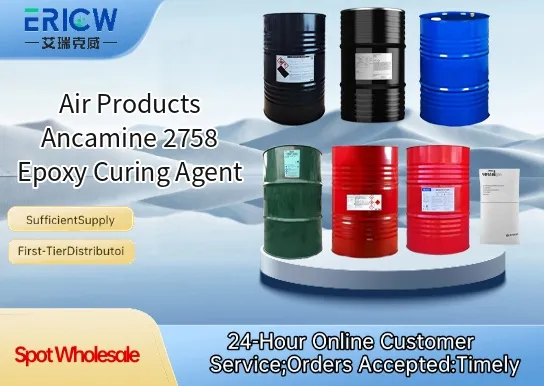
Fast-reacting, low-viscosity polyamine curing agent designed for ambient- and elevated-temperature epoxy systems.
Enables excellent mechanical properties including high tensile strength and impact resistance in cured epoxy formulations.
Offers good chemical resistance to hydrocarbons, aliphatic solvents, and mild acids after full cure.
Provides extended pot life at room temperature while supporting rapid gelation and full cure within hours at moderate heat.
Compatible with standard liquid epoxy resins (e.g., DGEBA types) without requiring solvent addition or complex formulation adjustments.
Structural adhesives for aerospace composite bonding and metal-to-metal joining.
High-performance coatings for industrial flooring, tank linings, and corrosion-resistant protective layers.
Electrical encapsulants and potting compounds requiring low exotherm and dimensional stability.
Wind turbine blade structural adhesives and repair systems demanding fast throughput and robust interlaminar shear strength.
Tooling and casting resins used in mold-making and prototyping applications.
| Chemical Type | Aliphatic polyamine |
| Product Form | Liquid |
| Appearance | Clear, pale yellow to amber liquid |
| Primary Applications | Structural adhesives, protective coatings, electrical encapsulation |
| Key Features | Fast cure, low viscosity, ambient- and heat-curable |
| Benefits | Improved productivity, excellent adhesion to metals and composites, low volatility |
| Storage Stability | 12 months unopened at 20–25°C in original sealed container |
| Handling Precautions | Use in well-ventilated areas; wear appropriate PPE (gloves, goggles, respirator if mist generated) |
Q1: What is the primary chemical class and functional mechanism of Ancamine 2758?
A: Ancamine 2758 is a low-viscosity, aliphatic polyamine-based epoxy curing agent. It functions through nucleophilic addition to epoxide groups, enabling rapid ambient-temperature cure with good flexibility and adhesion to diverse substrates.
Q2: Is Ancamine 2758 suitable for high-performance coatings requiring chemical resistance?
A: Yes — when fully cured with standard bisphenol-A or bisphenol-F epoxy resins, systems formulated with Ancamine 2758 demonstrate enhanced resistance to water, mild alkalis, and many solvents, making them well-suited for protective industrial and marine coatings.
Q3: How does Ancamine 2758 compare to traditional DETA or DEEA in terms of handling and safety?
A: Ancamine 2758 offers lower volatility and reduced skin sensitization potential compared to conventional aliphatic amines like DETA or DEEA. Its lower vapor pressure improves workplace air quality, and its moderate reactivity allows for longer pot life without sacrificing final cure performance.
Q4: Can Ancamine 2758 be used in formulations requiring FDA-compliant food-contact coatings?
A: Ancamine 2758 is not pre-approved for direct food-contact applications under FDA or EU frameworks. Formulators must conduct full regulatory evaluation—including extraction testing and compliance verification—based on the final cured system’s composition and intended use conditions.
Contact With Us:
E-mail: wangxingqiang@ericwchem.com
Have a Questions? Call Us:
Add:
Building A1, Jiete Industrial Park, Huangpu District, Guangzhou City, Guangdong Province, China