English
 Español
 tiếng việt
 русский
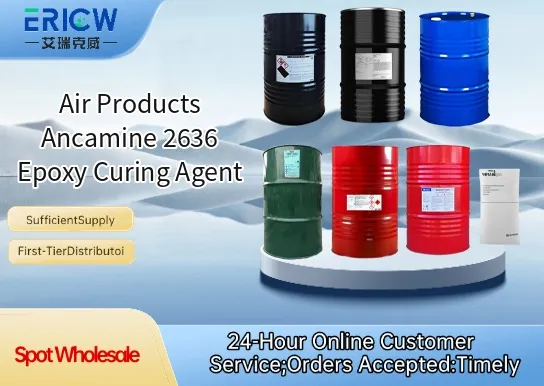
Fast-curing, low-viscosity aliphatic amine adduct designed for ambient and elevated temperature cure cycles.
Excellent chemical resistance—particularly to alkalis, solvents, and mild acids—after full cure.
Low exotherm profile enables thick-section casting and minimizes thermal stress in sensitive substrates.
Good adhesion to metals, concrete, and composite surfaces without aggressive surface preparation.
Low volatility and reduced odor compared to conventional aliphatic amines, supporting safer handling.
Industrial flooring systems requiring rapid return-to-service and chemical resistance.
Structural adhesive formulations for metal-to-metal and metal-to-composite bonding.
Electrical encapsulation and potting compounds where low heat generation and dimensional stability are critical.
Repair mortars and grouts for concrete infrastructure rehabilitation.
Wind blade bonding and composite tooling matrices demanding consistent cure performance.
| Chemical Type | Aliphatic amine adduct |
| Product Form | Liquid |
| Appearance | Pale yellow to amber, clear liquid |
| Primary Applications | Epoxy resin curing agent for coatings, adhesives, and composites |
| Key Features | Ambient-cure capable, low exotherm, low volatility |
| Benefits | Improved worker safety, reduced post-cure requirements, enhanced interfacial adhesion |
| Storage Stability | 12 months at 20–25°C in original sealed container |
| Compatible Resins | Bisphenol-A and bisphenol-F epoxy resins |
Q1: What is the primary chemical class of Ancamine 2636?
A: Ancamine 2636 is an aliphatic amine-based epoxy curing agent, specifically formulated as a low-viscosity, reactive liquid modifier designed to enhance flexibility, toughness, and cure speed in epoxy systems.
Q2: Is Ancamine 2636 suitable for ambient-cure applications?
A: Yes — it is commonly used in ambient- and low-temperature-cure formulations, delivering reliable reactivity without forced heating. Performance may vary depending on epoxy resin type, humidity, and film thickness.
Q3: How does Ancamine 2636 affect pot life and handling time?
A: It typically provides moderate pot life at room temperature — sufficient for standard mixing and application processes — while enabling faster development of handling strength compared to many conventional aliphatic amines.
Q4: Can Ancamine 2636 be used in high-performance coating or composite systems?
A: Yes — it is frequently incorporated into industrial coatings, adhesives, and composite matrices where improved impact resistance, reduced brittleness, and balanced cure kinetics are required. Compatibility with common DGEBA and novolac epoxies should be verified experimentally.
Q5: Does Ancamine 2636 require special handling or safety precautions?
A: As with most amine curing agents, it is skin- and eye-irritating and should be handled using appropriate personal protective equipment (PPE), including gloves, goggles, and ventilation. Refer to the Safety Data Sheet (SDS) for detailed exposure controls and first-aid measures.
Contact With Us:
E-mail: wangxingqiang@ericwchem.com
Have a Questions? Call Us:
Add:
Building A1, Jiete Industrial Park, Huangpu District, Guangzhou City, Guangdong Province, China