English
 Español
 tiếng việt
 русский
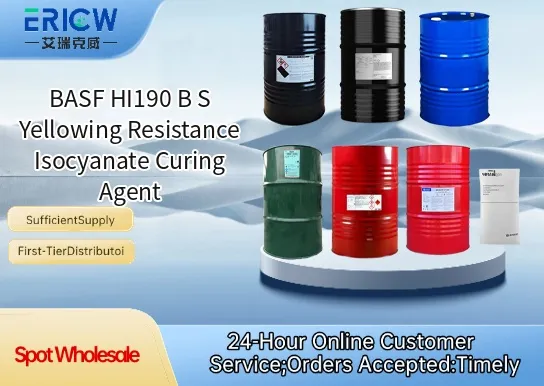
Exceptional yellowing resistance under UV exposure and thermal aging, ideal for light-stable coatings.
Low-viscosity aliphatic isocyanate formulation enabling easy handling and homogeneous mixing with polyols.
Excellent compatibility with acrylic, polyester, and polycarbonate polyol systems.
Fast-reacting at ambient and elevated temperatures without requiring excessive catalyst loading.
Meets stringent regulatory requirements including REACH compliance and low VOC emission profiles.
High-gloss automotive clearcoats requiring long-term color stability.
Architectural exterior coatings for façades and aluminum composite panels (ACM).
Precision optical coatings on lenses and transparent plastic substrates.
Industrial maintenance coatings for outdoor equipment and signage.
UV-curable hybrid systems where thermal post-cure enhances crosslink density.
| Chemical Type | Aliphatic polyisocyanate (hexamethylene diisocyanate trimer) |
| Product Form | Liquid |
| Appearance | Clear, pale yellow liquid |
| NCO Content (wt %) | 13.5–14.2% |
| Viscosity at 25°C (mPa·s) | 800–1,200 |
| Density at 25°C (g/cm³) | 1.18–1.22 |
| Primary Applications | Two-component polyurethane topcoats and clearcoats |
| Key Features | UV-stable, non-yellowing, low-VOC, solvent-based or high-solid formulations |
Q1: What is the primary function of BASF HI190 B S in coating and adhesive formulations?
A: BASF HI190 B S is a specialty isocyanate-based curing agent engineered to enhance yellowing resistance in polyurethane systems, particularly under UV exposure and thermal aging. It enables high-performance clear coats, topcoats, and laminating adhesives where long-term color stability is critical.
Q2: How does HI190 B S differ from conventional aliphatic isocyanate curing agents?
A: Unlike standard aliphatic isocyanates, HI190 B S incorporates a sterically hindered molecular architecture and optimized functional group reactivity to suppress chromophore formation during cure and service life. This results in significantly improved resistance to photoyellowing without compromising pot life or crosslink density.
Q3: Which resin types is HI190 B S typically compatible with?
A: HI190 B S is formulated for use with hydroxyl-functional acrylics, polyesters, and polycarbonate diols in two-component polyurethane systems. It demonstrates good miscibility and reactivity with low-viscosity resins commonly used in high-gloss architectural coatings, automotive refinish clearcoats, and optical-grade laminating adhesives.
Q4: What are the recommended storage and handling conditions?
A: Store in tightly sealed original containers under dry, cool conditions (below 30 °C) and protect from moisture, direct sunlight, and prolonged exposure to ambient humidity. Use appropriate personal protective equipment (PPE), including nitrile gloves and eye protection, as with all isocyanate-containing materials.
Q5: How should dosage be determined for optimal yellowing resistance and film performance?
A: Dosage depends on formulation requirements, but HI190 B S is typically used at low concentrations relative to conventional curing agents—generally ranging from 0.1% to 2% by weight based on total formulation—to achieve measurable yellowing suppression while maintaining mechanical integrity and cure kinetics.
Contact With Us:
E-mail: wangxingqiang@ericwchem.com
Have a Questions? Call Us:
Add:
Building A1, Jiete Industrial Park, Huangpu District, Guangzhou City, Guangdong Province, China