English
 Español
 tiếng việt
 русский
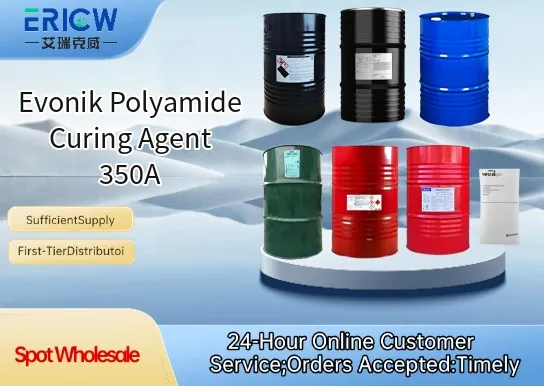
Excellent flexibility and impact resistance in cured epoxy systems.
Low viscosity enables easy handling, efficient mixing, and good wetting of fillers and reinforcements.
Room-temperature curing capability with balanced pot life and rapid development of mechanical properties.
Good chemical resistance, particularly to alkalis and solvents, after full cure.
Low odor and reduced amine blush tendency compared to conventional polyamide hardeners.
Industrial flooring coatings requiring durability and chemical resistance.
Concrete repair mortars and structural adhesives for civil engineering.
Marine and offshore protective coatings for steel substrates.
Electrical encapsulation and insulating varnishes for medium-voltage components.
Composite laminating resins for wind energy and transportation applications.
| Chemical Type | Polyamide-based epoxy curing agent |
| Product Form | Liquid |
| Appearance | Amber to light brown transparent liquid |
| Amine Value | 240–270 mg KOH/g |
| Viscosity (25 °C) | 1,800–2,500 mPa·s |
| Density (20 °C) | 0.96–0.99 g/cm³ |
| Flash Point | ≥120 °C (closed cup) |
| Storage Stability | At least 12 months at 15–25 °C in sealed containers |
Q1: What is the primary function of Polyamide Curing Agent 350A in epoxy systems?
A: Polyamide Curing Agent 350A is a low-viscosity, aliphatic polyamide designed to act as a reactive hardener for epoxy resins. It enables ambient- or low-temperature cure, delivering flexible, tough, and chemically resistant thermoset networks—particularly suited for protective coatings and adhesives.
Q2: Is Polyamide Curing Agent 350A compatible with standard bisphenol-A and bisphenol-F epoxy resins?
A: Yes, it exhibits broad compatibility with common liquid and solid epoxy resins, including DGEBA and DGEBF types. Its low viscosity and good miscibility support homogeneous blending without extensive heating or high-shear mixing.
Q3: How does humidity affect the curing performance of formulations containing 350A?
A: As an amine-based curing agent, 350A is sensitive to moisture—excess humidity may lead to surface blushing, reduced gloss, or delayed gelation. For optimal results, application should occur under controlled ambient conditions, and substrates must be dry and free of condensation.
Q4: Can Polyamide Curing Agent 350A be used in food-contact or potable water applications?
A: While 350A is not inherently prohibited for such uses, its suitability depends entirely on the final cured formulation’s compliance with applicable regulatory frameworks. End-users must validate full system conformity—including all raw materials, processing conditions, and intended service environment—through qualified testing and regulatory review.
Contact With Us:
E-mail: wangxingqiang@ericwchem.com
Have a Questions? Call Us:
Add:
Building A1, Jiete Industrial Park, Huangpu District, Guangzhou City, Guangdong Province, China