English
 Español
 tiếng việt
 русский
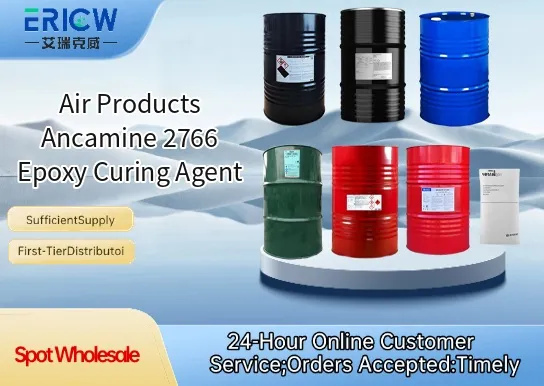
Fast-reacting aliphatic amine curing agent designed for ambient-cure epoxy systems.
Enables excellent mechanical properties including high hardness and impact resistance.
Low viscosity for easy handling, metering, and mixing with standard epoxy resins.
Provides good chemical resistance to water, salts, and mild solvents after full cure.
Meets stringent VOC requirements with negligible volatile organic compound emissions.
Industrial flooring and concrete coatings requiring rapid return-to-service.
Protective coatings for steel structures in marine and infrastructure environments.
Electrical encapsulants and potting compounds for medium-voltage components.
Adhesives and composite matrix systems demanding short gel times and high Tg.
Repair mortars and grouts where fast strength development is critical.
| Chemical Type | Aliphatic polyamine |
| Product Form | Liquid |
| Appearance | Clear, pale yellow liquid |
| Primary Applications | Ambient-cure epoxy coatings, adhesives, and composites |
| Key Features | Fast cure at room temperature, low viscosity, low odor |
| Benefits | Reduced processing time, improved productivity, enhanced surface hardness |
| Storage Stability | 12 months unopened at 20–25°C |
| Handling Precautions | Use in well-ventilated areas; refer to SDS for PPE guidance |
Q1: What is the primary chemical class of Ancamine 2766?
A: Ancamine 2766 is a modified aliphatic amine curing agent, designed to provide balanced reactivity, low volatility, and improved handling characteristics compared to conventional aliphatic amines.
Q2: Is Ancamine 2766 suitable for ambient-cure epoxy systems?
A: Yes — it is formulated to enable efficient ambient-temperature cure of epoxy resins, making it well-suited for industrial maintenance coatings, adhesives, and repair mortars where elevated heat is impractical or unavailable.
Q3: How does Ancamine 2766 compare to standard DETA or TETA in terms of odor and skin sensitization potential?
A: Ancamine 2766 exhibits significantly reduced volatility and amine odor versus traditional polyamines like DETA or TETA, and its molecular modification contributes to lower dermal sensitization risk — though appropriate personal protective equipment (PPE) remains essential during handling.
Q4: Can Ancamine 2766 be used in high-solids or solvent-free epoxy formulations?
A: Yes — its low viscosity and compatibility with common liquid epoxy resins support formulation of high-solids and 100% solids systems, particularly where extended pot life and controlled exotherm are required.
Q5: What types of epoxy resins is Ancamine 2766 typically paired with?
A: It is commonly used with standard liquid bisphenol-A and bisphenol-F epoxy resins, as well as novolac epoxies in demanding corrosion-protection applications; optimal performance depends on resin functionality, molecular weight, and intended end-use requirements.
Contact With Us:
E-mail: wangxingqiang@ericwchem.com
Have a Questions? Call Us:
Add:
Building A1, Jiete Industrial Park, Huangpu District, Guangzhou City, Guangdong Province, China