English
 Español
 tiếng việt
 русский
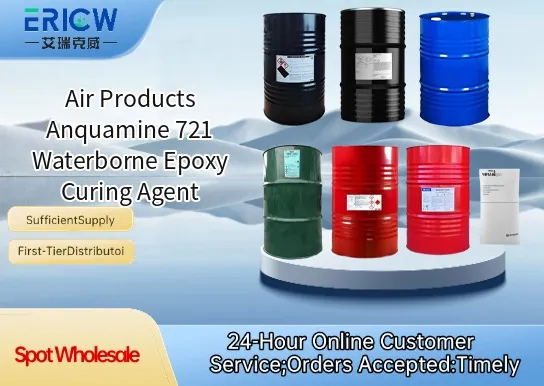
Low-VOC, waterborne amine adduct formulation compliant with global environmental regulations.
Enables fast ambient-cure epoxy systems with excellent early hardness development and low tack.
Provides outstanding adhesion to concrete, steel, and other industrial substrates without primer.
Offers good pot life stability (≥4 hours at 23°C) when blended with standard liquid epoxy resins.
Delivers superior chemical resistance in cured films, including resistance to alkalis and mild solvents.
Waterborne epoxy floor coatings for commercial and industrial facilities.
Concrete repair and protective linings in wastewater treatment infrastructure.
Low-emission metal primers and maintenance coatings for HVAC and architectural metal substrates.
Hybrid epoxy-acrylic topcoats requiring enhanced durability and reduced VOC emissions.
Green-certified coating systems targeting LEED v4.1 and similar sustainability standards.
| Chemical Type | Waterborne polyamine adduct |
| Product Form | Liquid dispersion |
| Appearance | Off-white to light tan, opaque liquid |
| pH (10% aqueous solution) | 9.5–10.5 |
| Solids Content (wt%) | 48–52% |
| Viscosity (mPa·s, Brookfield, 25°C) | 1,200–2,000 |
| Density (g/cm³ at 25°C) | 1.04–1.08 |
| Free Amine Value (mg KOH/g) | 120–150 |
Q1: What types of epoxy resins is Anquamine 721 compatible with?
A: Anquamine 721 is specifically formulated for use with waterborne epoxy dispersions and certain hydrophilically modified solid or liquid epoxy resins. It demonstrates good compatibility and reactivity with standard bisphenol A-based and bisphenol F-based epoxy dispersions commonly used in industrial coatings and maintenance applications.
Q2: How does Anquamine 721 contribute to film formation and cure performance in ambient-cure systems?
A: As a polyamine-based waterborne curing agent, Anquamine 721 enables robust ambient-temperature cure through efficient reaction with epoxy groups. It supports good coalescence and film integrity in waterborne systems, delivering balanced hardness development, chemical resistance, and adhesion—particularly on properly prepared steel and concrete substrates.
Q3: Can Anquamine 721 be used in formulations requiring low VOC content?
A: Yes—Anquamine 721 is supplied as a water-based dispersion with negligible organic solvent content, making it well-suited for formulating low-VOC and compliant waterborne epoxy coating systems intended for industrial maintenance, protective coatings, and architectural applications where regulatory and sustainability targets apply.
Q4: What is the typical mixing ratio range when formulating with Anquamine 721?
A: The required dosage depends on the epoxy equivalent weight (EEW) of the selected resin and desired performance profile. Formulators typically adjust the amine hydrogen equivalent ratio (AHEW) to achieve stoichiometric or slightly amine-rich balances, with practical usage generally ranging from 0.1% to 2% by weight relative to total formulation solids—subject to optimization for pot life, cure speed, and final film properties.
Contact With Us:
E-mail: wangxingqiang@ericwchem.com
Have a Questions? Call Us:
Add:
Building A1, Jiete Industrial Park, Huangpu District, Guangzhou City, Guangdong Province, China