English
 Español
 tiếng việt
 русский
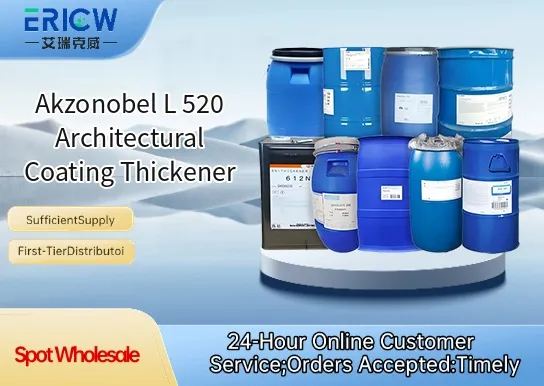
Non-ionic associative polyurethane (HEUR) rheology modifier delivering balanced viscosity control in both low- and high-shear conditions.
Excellent compatibility with a broad range of architectural coating formulations, including acrylic, vinyl-acrylic, and styrene-acrylic latex systems.
Provides outstanding sag resistance and leveling performance without compromising brushability or roller application properties.
Low foaming characteristics support efficient high-speed manufacturing and airless spray application.
Stable performance across pH range 4–12 and minimal sensitivity to electrolytes commonly found in pigmented coatings.
Interior and exterior waterborne wall paints (flat, eggshell, satin, and semi-gloss finishes).
Primer-sealers for masonry, drywall, and plaster substrates.
Textured decorative coatings and faux finishes.
Low-VOC and zero-VOC compliant architectural coatings.
Ready-mixed decorative coatings for professional and DIY markets.
| Chemical Type | Non-ionic associative polyurethane (HEUR) |
| Product Form | Clear to slightly hazy, low-viscosity liquid |
| Appearance | Colorless to pale yellow liquid |
| pH (1% aqueous solution) | 6.0 – 8.0 |
| Active Content | 30.0 ± 1.0 wt% |
| Density (20 °C) | 1.01 – 1.03 g/cm³ |
| Solvent System | Propylene glycol monomethyl ether (PGME) and water |
| Primary Applications | Architectural waterborne coatings requiring balanced flow and film-building properties |
Q1: What type of rheology modifier is AkzoNobel L 520?
A: AkzoNobel L 520 is a hydrophobically modified ethoxylated urethane (HEUR) thickener designed to provide balanced pseudoplastic flow behavior, enhancing sag resistance while maintaining good leveling and spatter control in architectural coatings.
Q2: How is L 520 typically incorporated into water-based architectural paint formulations?
A: L 520 is generally added during the let-down stage, after pigments and fillers are dispersed. It is recommended to pre-dilute with water or a compatible co-solvent before addition to ensure uniform distribution and avoid localized over-thickening.
Q3: Is L 520 compatible with common biocides and other additives used in interior and exterior paints?
A: Yes, L 520 demonstrates broad compatibility with standard preservation systems, defoamers, wetting agents, and coalescing aids commonly employed in architectural coatings—though compatibility testing in the final formulation is always recommended to confirm performance stability.
Q4: Does L 520 contribute to film formation or affect dry-film properties?
A: As a non-film-forming rheology modifier, L 520 remains in the aqueous phase and does not participate in the binder coalescence process. It has no significant impact on final film integrity, gloss, or adhesion when used at typical dosage levels.
Contact With Us:
E-mail: wangxingqiang@ericwchem.com
Have a Questions? Call Us:
Add:
Building A1, Jiete Industrial Park, Huangpu District, Guangzhou City, Guangdong Province, China