English
 Español
 tiếng việt
 русский
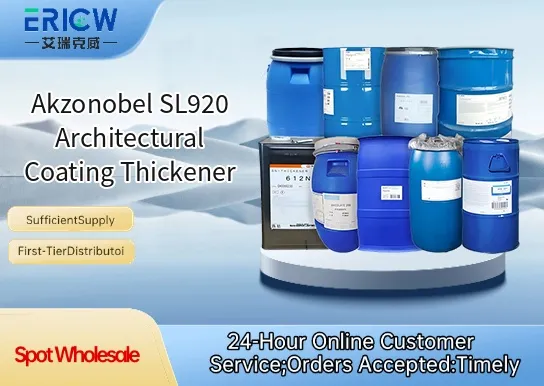
High-efficiency associative rheology control for balanced viscosity in both low- and high-shear conditions.
Excellent compatibility with a broad range of architectural coating formulations, including acrylic, vinyl-acrylic, and styrene-acrylic dispersions.
Improved sag resistance and brush/roller drag performance without compromising flow and leveling.
Low-VOC and APEO-free, supporting compliance with stringent environmental regulations and green building standards.
Stable thickening performance across pH 7–10 and minimal sensitivity to electrolytes and co-solvents.
Interior and exterior waterborne wall paints (matte, satin, and semi-gloss finishes).
Textured decorative coatings and plasters.
Primer and undercoat formulations requiring robust anti-settling properties.
Low-odor and eco-labeled premium architectural coatings.
Ready-mixed renovation and refurbishment coatings.
| Chemical Type | Hydrophobically modified ethoxylated urethane (HEUR) |
| Product Form | Clear to slightly hazy, viscous liquid |
| Appearance | Colorless to pale yellow liquid |
| pH (1% aqueous solution) | 7.0 – 8.5 |
| Active Content | 30 – 32 wt% |
| Primary Applications | Architectural waterborne coatings (paints, primers, textured finishes) |
| Key Features | Non-ionic, associative thickener with dual shear-thinning profile |
| Benefits | Enhanced application properties, storage stability, and formulation flexibility |
Q1: What type of rheology does SL920 provide in architectural coatings?
A: SL920 is a hydrophobically modified ethoxylated urethane (HEUR) thickener that delivers balanced pseudoplastic rheology—providing good sag resistance during application while maintaining excellent flow and leveling after brushing or rolling.
Q2: Is SL920 compatible with common architectural coating formulations?
A: Yes, SL920 exhibits broad compatibility with water-based acrylic, vinyl acetate, and styrene-acrylic emulsions, as well as with typical surfactants, coalescents, and defoamers used in interior and exterior architectural paints.
Q3: How should SL920 be incorporated into a paint formulation?
A: SL920 is typically added during the let-down stage, after pigment dispersion and under moderate agitation. It is recommended to pre-dilute with water or a water-miscible solvent to ensure uniform distribution and avoid localized overdosing.
Q4: Does SL920 contribute to long-term storage stability?
A: When properly formulated and dosed, SL920 helps maintain consistent viscosity over time by resisting microbial degradation and minimizing syneresis—supporting robust shelf-life performance in low-VOC and zero-VOC architectural systems.
Q5: Can SL920 be used in combination with other thickeners?
A: Yes, SL920 is frequently paired with associative cellulose ethers or inorganic thickeners to fine-tune rheological profiles—for example, enhancing high-shear viscosity with HEUR while leveraging the low-shear yield stress of clay-based additives.
Contact With Us:
E-mail: wangxingqiang@ericwchem.com
Have a Questions? Call Us:
Add:
Building A1, Jiete Industrial Park, Huangpu District, Guangzhou City, Guangdong Province, China