English
 Español
 tiếng việt
 русский
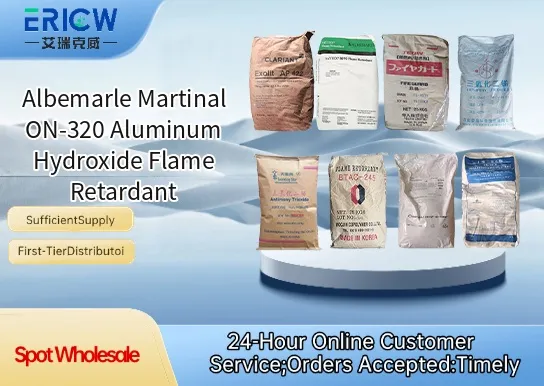
High-purity aluminum hydroxide with controlled particle size distribution for optimal dispersion in polymer matrices.
Endothermic decomposition at ~180–200 °C, releasing water vapor to cool the substrate and dilute flammable gases.
Halogen-free and low-smoke formulation, supporting compliance with stringent fire safety and environmental regulations (e.g., RoHS, REACH).
Surface-treated with proprietary silane chemistry to enhance compatibility with polyolefins, PVC, and thermosets.
Low abrasivity and excellent thermal stability during compounding and extrusion processing.
Flame-retarded wire and cable compounds (LSZH – Low Smoke Zero Halogen).
Fire-safe building materials including insulation foams, ceiling tiles, and decorative panels.
Transportation interiors such as automotive seating foams, dashboards, and railcar components.
Electrical enclosures and housings for consumer electronics and industrial equipment.
Thermoplastic elastomers (TPEs) and flexible PVC requiring UL 94 V-0 or V-1 rated performance.
| Chemical Type | Aluminum hydroxide, Al(OH)₃ |
| Product Form | Free-flowing white powder |
| Appearance | White, odorless, non-toxic powder |
| Primary Applications | Halogen-free flame retardant for polymers |
| Key Features | Surface-modified, low moisture content, narrow PSD |
| Decomposition Onset Temperature | ≥180 °C (by TGA, 10 °C/min, air) |
| Loss on Drying (105 °C, 2 h) | ≤0.5 wt% |
| pH (10% aqueous slurry) | 7.5–8.5 |
Q1: What makes Martinal ON-320 suitable for flame retardancy in polymer systems?
A: Martinal ON-320 is a surface-treated aluminum hydroxide designed to enhance dispersion and interfacial compatibility in thermoplastics and elastomers. Its controlled particle size distribution and optimized surface chemistry support efficient endothermic decomposition, releasing water vapor to dilute combustible gases and cool the substrate during fire exposure.
Q2: How does ON-320 differ from standard aluminum hydroxide grades?
A: Unlike conventional aluminum hydroxides, ON-320 features a proprietary surface treatment that improves thermal stability onset and reduces moisture sensitivity. This enables better processing performance at elevated temperatures and supports higher loading levels without significant viscosity increase or plate-out issues in extrusion or injection molding.
Q3: Is Martinal ON-320 compatible with halogen-free cable compounds and low-smoke zero-halogen (LSZH) formulations?
A: Yes — ON-320 is widely used in LSZH applications due to its non-halogenated nature, low smoke generation, and synergistic behavior with other mineral fillers like magnesium hydroxide. It contributes to achieving UL 1685, IEC 60332, and EN 50399 compliance when formulated appropriately.
Q4: What handling precautions should be observed during storage and processing?
A: Store in a cool, dry environment under covered conditions to minimize moisture uptake. During processing, avoid prolonged exposure to high humidity prior to compounding, and ensure adequate drying of masterbatches if used in hygroscopic resins such as polyamides or polyesters.
Contact With Us:
E-mail: wangxingqiang@ericwchem.com
Have a Questions? Call Us:
Add:
Building A1, Jiete Industrial Park, Huangpu District, Guangzhou City, Guangdong Province, China