English
 Español
 tiếng việt
 русский
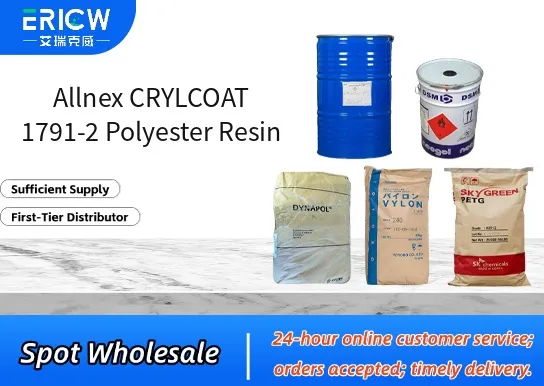
High-gloss, durable finish with excellent flow and leveling characteristics.
Optimized for TGIC-free powder coating systems, supporting sustainable formulation strategies.
Excellent chemical resistance, including resistance to household cleaners and mild solvents.
Good mechanical properties: high impact resistance and flexibility on metal substrates.
Consistent batch-to-batch performance with narrow acid value and viscosity control.
Architectural aluminum extrusions for windows, doors, and curtain walls.
Appliance housings including refrigerators, washing machines, and ovens.
Office furniture frames and modular partition systems.
Lighting fixtures and electrical enclosures requiring weather-resistant finishes.
Outdoor fitness equipment and garden tools with long-term UV exposure requirements.
| Chemical Type | Carboxyl-functional saturated polyester |
| Product Form | Pale yellow to light amber free-flowing granules |
| Appearance | Free of visible specks or discoloration |
| Acid Value (mg KOH/g) | 24–28 |
| Melt Viscosity (Pa·s, 160 °C) | 3.5–5.5 |
| Gardner Color (meq/100 g) | ≤ 3 |
| Moisture Content (wt%) | ≤ 0.2 |
| Primary Applications | TGIC-free decorative powder coatings for indoor/outdoor metal substrates |
Q1: What is the primary application of CRYLCOAT 1791-2 in powder coatings?
A: CRYLCOAT 1791-2 is a carboxyl-functional polyester resin designed for use as a binder in TGIC-free and HAA-cured architectural and industrial powder coatings, particularly where high gloss, excellent flow, and good weather resistance are required.
Q2: Is CRYLCOAT 1791-2 compatible with common curing agents used in powder coatings?
A: Yes — it is formulated for compatibility with hydroxyalkyl amide (HAA) crosslinkers such as Primid XL-552 and other standard HAA systems, enabling robust cure profiles and good storage stability in formulated powders.
Q3: How does CRYLCOAT 1791-2 contribute to film formation and appearance properties?
A: Its balanced molecular weight distribution and controlled acid value support excellent melt viscosity behavior, resulting in smooth film formation, high gloss retention, and reduced orange peel — especially in medium- to high-gloss decorative finishes.
Q4: Can CRYLCOAT 1791-2 be blended with other resins to modify performance?
A: Yes — it is commonly blended with other carboxyl-functional polyesters or acrylics to fine-tune flexibility, cure speed, or chemical resistance, though compatibility and formulation stability should be verified experimentally for each intended blend ratio.
Contact With Us:
E-mail: wangxingqiang@ericwchem.com
Have a Questions? Call Us:
Add:
Building A1, Jiete Industrial Park, Huangpu District, Guangzhou City, Guangdong Province, China