English
 Español
 tiếng việt
 русский
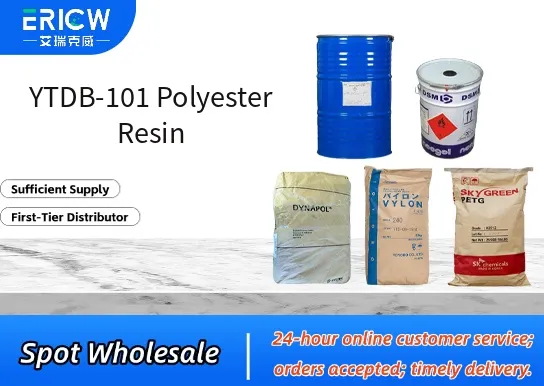
High reactivity with standard styrene monomers for rapid gelation and efficient production cycles.
Excellent mechanical strength and dimensional stability in cured laminates.
Good weather resistance and UV stability, suitable for outdoor applications.
Low viscosity at room temperature, enabling easy handling, impregnation, and processing.
Consistent batch-to-batch performance ensured by strict QC control and ISO-certified manufacturing.
Fiberglass-reinforced plastic (FRP) tanks and chemical storage vessels.
Marine hulls, decks, and structural components requiring corrosion resistance.
Wind turbine blade substrates and nacelle enclosures.
Automotive body panels and under-hood composite parts.
Architectural cladding, grilles, and decorative molded elements.
| Chemical Type | Unsaturated orthophthalic polyester resin |
| Product Form | Liquid |
| Appearance | Clear to pale yellow, homogeneous liquid |
| Viscosity (25°C, mPa·s) | 350–450 |
| Acid Value (mg KOH/g) | 18–22 |
| Reactive Diluent | Styrene (35–40 wt%) |
| Specific Gravity (25°C) | 1.10–1.14 |
| Storage Stability (25°C) | ≥6 months in sealed container |
Q1: What is the primary application field for YTDB-101 Polyester Resin?
A: YTDB-101 is specifically formulated for high-performance composite applications, including pultrusion, filament winding, and laminating processes—particularly where enhanced mechanical strength, dimensional stability, and chemical resistance are required in structural components.
Q2: Is YTDB-101 compatible with common curing agents and accelerators used in unsaturated polyester systems?
A: Yes, YTDB-101 exhibits broad compatibility with standard methyl ethyl ketone peroxide (MEKP) initiators and cobalt-based accelerators. Optimal cure profiles may vary depending on ambient conditions and formulation design, so lab-scale validation is recommended prior to full-scale production.
Q3: How does YTDB-101 perform under elevated temperature and humid environments during processing?
A: YTDB-101 demonstrates improved hydrolytic stability and reduced sensitivity to moisture ingress compared to conventional orthophthalic resins, supporting more consistent gel times and reduced risk of surface tackiness in warm, humid conditions—though controlled storage and handling remain essential.
Q4: Can YTDB-101 be blended with other resin types to modify performance?
A: Limited blending with vinyl ester or epoxy-modified systems is possible to tailor flexibility or corrosion resistance, but phase compatibility and long-term stability must be verified experimentally. We do not recommend untested combinations without prior technical consultation.
Contact With Us:
E-mail: wangxingqiang@ericwchem.com
Have a Questions? Call Us:
Add:
Building A1, Jiete Industrial Park, Huangpu District, Guangzhou City, Guangdong Province, China