English
 Español
 tiếng việt
 русский
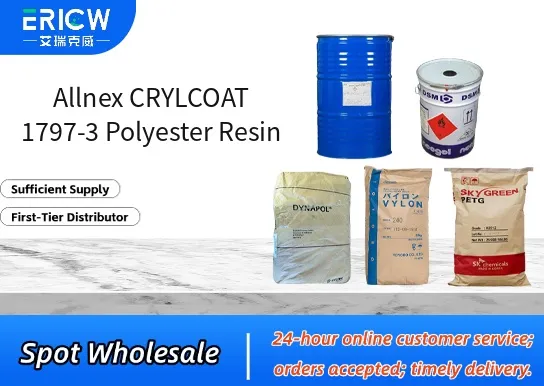
High-gloss, durable finish with excellent flow and leveling characteristics.
Optimized for low-cure temperature applications (180–190 °C, 15–20 min).
Excellent resistance to yellowing and UV degradation in outdoor exposure.
Good chemical resistance to solvents, acids, and household cleaners.
Compatible with standard TGIC and hydroxyalkylamide (HAA) curing agents.
Architectural aluminum extrusions for curtain walls and window frames.
Outdoor furniture and garden equipment coatings.
Residential and commercial fencing and railings.
Light industrial equipment housings and enclosures.
Consumer appliance components requiring weather-resistant finishes.
| Chemical Type | Carboxyl-functional saturated polyester |
| Product Form | Free-flowing white to off-white granules |
| Appearance | Granular, homogeneous particles |
| Acid Value (mg KOH/g) | 26–30 |
| Melt Viscosity (Pa·s at 180 °C) | 3,500–4,500 |
| Gardner Color | ≤ 2 |
| Primary Applications | Exterior powder coatings for architectural and industrial substrates |
| Key Features | Low-cure, high-gloss, UV-stable, TGIC/HAA compatible |
Q1: What is the primary application of CRYLCOAT 1797-3 in powder coatings?
A: CRYLCOAT 1797-3 is a carboxyl-functional polyester resin specifically designed for use in TGIC-free, high-gloss, weather-resistant thermosetting powder coatings—particularly for architectural and industrial metal finishing applications requiring excellent UV stability and long-term color retention.
Q2: Which crosslinkers is CRYLCOAT 1797-3 typically formulated with?
A: It is commonly crosslinked with β-hydroxyalkyl amides (HAA), such as Primid® XL-552 or equivalent alternatives, enabling robust curing profiles at standard powder coating bake temperatures (typically 180–200 °C for 10–20 minutes).
Q3: How does CRYLCOAT 1797-3 contribute to film performance in outdoor applications?
A: Its molecular design delivers enhanced resistance to chalking, gloss loss, and color shift under prolonged UV exposure and cyclic weathering, supporting durable performance in demanding exterior environments without reliance on TGIC.
Q4: Is CRYLCOAT 1797-3 suitable for low-cure or energy-efficient formulations?
A: While optimized for conventional cure schedules, it can be adapted to lower-temperature curing through formulation adjustments—including selection of reactive co-resins, catalysts, and optimized particle size distribution—though full performance validation under reduced thermal input is recommended.
Q5: What handling and storage precautions should be observed?
A: Store in a cool, dry place below 30 °C in original sealed packaging to prevent moisture uptake and premature agglomeration. Avoid exposure to high humidity during handling, and ensure equipment is clean and free from contamination prior to blending.
Contact With Us:
E-mail: wangxingqiang@ericwchem.com
Have a Questions? Call Us:
Add:
Building A1, Jiete Industrial Park, Huangpu District, Guangzhou City, Guangdong Province, China