English
 Español
 tiếng việt
 русский
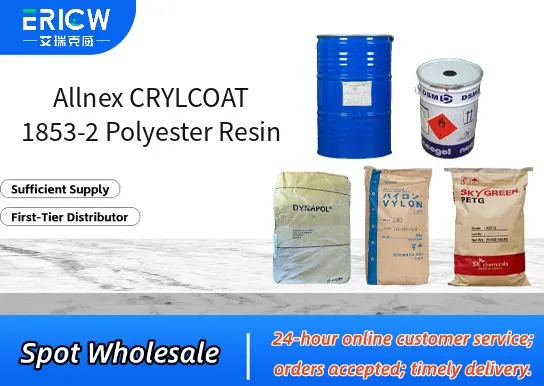
High-gloss, excellent flow and leveling for premium surface aesthetics.
Outstanding weather resistance and UV stability for long-term outdoor performance.
Good chemical resistance to solvents, cleaning agents, and mild acids.
Compatible with standard TGIC and hydroxyalkylamide (HAA) curing agents.
Designed for low-cure powder coating systems (160–180 °C / 30 min).
Architectural aluminum extrusions (window frames, curtain walls).
Outdoor furniture and garden equipment coatings.
Automotive exterior trim and non-under-hood components.
General industrial metal products requiring durable, decorative finishes.
| Chemical Type | Carboxyl-functional saturated polyester |
| Product Form | Pale yellow to light amber solid granules |
| Appearance | Free-flowing, uniform granules |
| Acid Value (mg KOH/g) | 27–33 |
| Gardner Color | ≤ 3 |
| Melt Viscosity (200 °C, Pa·s) | 40–70 |
| Softening Point (°C, ASTM E28) | 75–85 |
| Primary Applications | Exterior-grade TGIC-free and TGIC-based powder coatings |
Q1: What is the primary application of CRYLCOAT 1853-2 in powder coatings?
A: CRYLCOAT 1853-2 is a carboxyl-functional polyester resin specifically designed for use in TGIC-free and HAA-cured architectural and industrial powder coating systems, where it contributes to excellent gloss retention, weather resistance, and mechanical durability.
Q2: How does CRYLCOAT 1853-2 perform under UV exposure and outdoor conditions?
A: This resin exhibits strong inherent UV stability and chalk resistance due to its optimized molecular structure and aromatic/aliphatic balance, making it suitable for long-term exterior applications such as façade panels, window frames, and outdoor furniture coatings.
Q3: Is CRYLCOAT 1853-2 compatible with standard curing agents used in powder coatings?
A: Yes — it is fully compatible with common hydroxyalkyl amide (HAA) crosslinkers and also works well with alternative TGIC-free systems based on β-hydroxyalkylamide chemistry, offering formulators flexibility in cure schedule and regulatory compliance.
Q4: What are the typical processing characteristics during extrusion and curing?
A: CRYLCOAT 1853-2 demonstrates good melt viscosity control and stable rheology during extrusion, enabling uniform dispersion of pigments and additives. It cures efficiently at standard powder coating temperatures (typically 180–200 °C for 10–20 minutes), delivering full crosslink density and film integrity.
Q5: Can CRYLCOAT 1853-2 be blended with other resins to modify performance?
A: Yes — it is commonly blended with complementary polyester resins or acrylics to fine-tune properties such as flow, texture development, or chemical resistance, though compatibility and final performance should be verified through lab-scale formulation trials.
Contact With Us:
E-mail: wangxingqiang@ericwchem.com
Have a Questions? Call Us:
Add:
Building A1, Jiete Industrial Park, Huangpu District, Guangzhou City, Guangdong Province, China