English
 Español
 tiếng việt
 русский
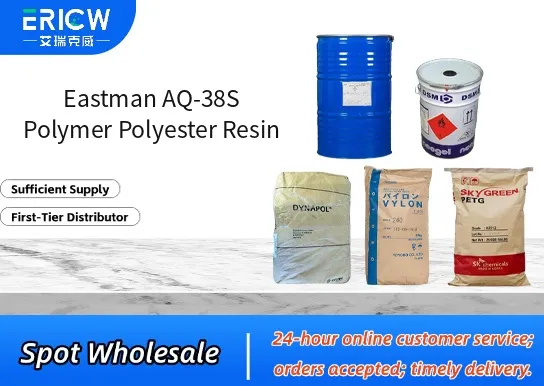
Water-dispersible polyester resin offering excellent film-forming capability without organic co-solvents.
Provides outstanding adhesion to diverse substrates including metals, plastics, and primed wood.
Delivers high gloss, clarity, and UV resistance in cured coatings.
Enables low-VOC formulations compliant with stringent environmental regulations.
Exhibits good hydrolytic stability and compatibility with common crosslinkers (e.g., melamine, epoxy, isocyanate).
High-performance waterborne industrial maintenance coatings.
Architectural metal façade and roofing coatings.
Coatings for outdoor furniture and garden equipment.
Interior and exterior coil coating primers and topcoats.
Refinish coatings for agricultural and construction machinery.
| Chemical Type | Water-dispersible saturated polyester |
| Product Form | Aqueous dispersion |
| Appearance | Opaque white to off-white liquid |
| pH (25 °C) | 7.0–8.5 |
| Solids Content (wt%) | 35–38 |
| Viscosity (mPa·s, Brookfield LVT, #2 spindle, 20 rpm, 25 °C) | 100–300 |
| Density (g/cm³, 25 °C) | 1.02–1.05 |
| Primary Applications | Waterborne industrial and architectural coatings |
Q1: What is the primary function of Eastman AQ-38S in coating and ink formulations?
A: Eastman AQ-38S is a water-dispersible polyester resin designed to enhance film formation, improve substrate adhesion, and contribute to gloss and flexibility in water-based coatings and inks—particularly for flexible packaging and paper applications.
Q2: Is Eastman AQ-38S compatible with common water-based polymer systems?
A: Yes, AQ-38S is formulated for compatibility with acrylic emulsions, vinyl acetate copolymers, and other waterborne resins commonly used in industrial coatings. Compatibility should be verified experimentally in the final formulation due to sensitivity to pH, ionic strength, and surfactant interactions.
Q3: How should Eastman AQ-38S be incorporated into a formulation?
A: It is typically added during the let-down stage under mild agitation. Avoid high-shear mixing at elevated temperatures to preserve dispersion stability. Pre-dilution with deionized water may facilitate uniform incorporation, especially in low-viscosity systems.
Q4: Does Eastman AQ-38S require post-curing or thermal treatment to achieve optimal performance?
A: While it forms functional films at ambient temperature, thermal drying (e.g., 60–90 °C for several minutes) generally improves coalescence, crosslink density, and final mechanical properties such as rub resistance and solvent holdout.
Contact With Us:
E-mail: wangxingqiang@ericwchem.com
Have a Questions? Call Us:
Add:
Building A1, Jiete Industrial Park, Huangpu District, Guangzhou City, Guangdong Province, China