English
 Español
 tiếng việt
 русский
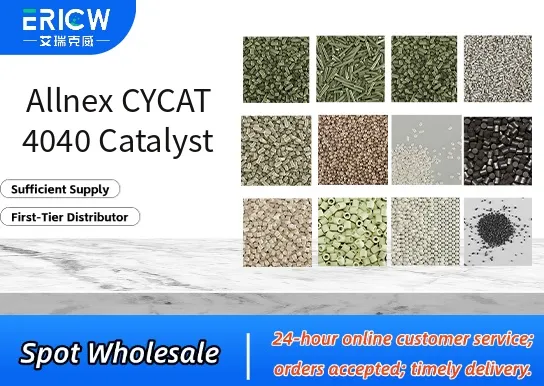
Highly efficient acid catalyst for melamine-formaldehyde and urea-formaldehyde resin crosslinking.
Enables low-cure temperature performance, reducing energy consumption in industrial baking processes.
Offers excellent storage stability in solvent-based coating systems.
Delivers consistent film hardness and chemical resistance in thermosetting coatings.
Compatible with a broad range of acrylic, polyester, and alkyd resin systems.
Automotive OEM and refinish coil coatings.
Industrial maintenance and appliance coatings.
Powder coating primers and topcoats.
Can and container coatings requiring fast cure and high durability.
General-purpose thermosetting decorative and protective finishes.
| Chemical Type | Blocked para-toluenesulfonic acid (p-TSA) |
| Product Form | Liquid |
| Appearance | Clear, colorless to pale yellow liquid |
| Primary Applications | Crosslinking catalyst for amino resins in thermosetting coatings |
| Key Features | Low volatility, delayed reactivity, improved pot life |
| Benefits | Enhanced flow, reduced pinholing, improved substrate adhesion |
| Solubility | Miscible with common organic solvents (e.g., xylene, butanol, esters) |
| Storage Stability | ≥12 months at 25°C in sealed original container |
Q1: What is the primary function of CYCAT 4040 in coating and ink formulations?
A: CYCAT 4040 is a highly active acid catalyst designed to accelerate thermosetting reactions—particularly melamine-formaldehyde and urea-formaldehyde crosslinking—in baked coatings, coil coatings, and industrial inks. It promotes efficient cure at reduced temperatures and shorter dwell times.
Q2: How should CYCAT 4040 be incorporated into a formulation?
A: It is typically added during the let-down stage under ambient or mildly elevated temperatures, with good agitation to ensure uniform dispersion. Pre-dilution in a compatible solvent or resin solution is recommended to avoid localized acidity and potential gelation.
Q3: Is CYCAT 4040 compatible with hydroxyl-functional acrylics and polyesters?
A: Yes, CYCAT 4040 demonstrates broad compatibility with common hydroxyl-terminated resins used in thermoset systems, including acrylics, polyesters, and alkyds. Compatibility should always be verified in the final formulation due to sensitivity to pH, water content, and other additives.
Q4: Does CYCAT 4040 require special handling or storage conditions?
A: As a strong organic acid catalyst, it should be stored in tightly sealed containers away from moisture, heat, and alkaline materials. Handling requires appropriate PPE—including chemical-resistant gloves and eye protection—due to its corrosive nature. Avoid inhalation of dust or mists.
Q5: Can CYCAT 4040 be used in low-VOC or high-solids systems?
A: Yes, CYCAT 4040 is suitable for use in low-VOC and high-solids thermoset formulations, as it does not contribute volatile components and remains effective at lower solvent levels—provided adequate mixing and dispersion are achieved.
Contact With Us:
E-mail: wangxingqiang@ericwchem.com
Have a Questions? Call Us:
Add:
Building A1, Jiete Industrial Park, Huangpu District, Guangzhou City, Guangdong Province, China