English
 Español
 tiếng việt
 русский
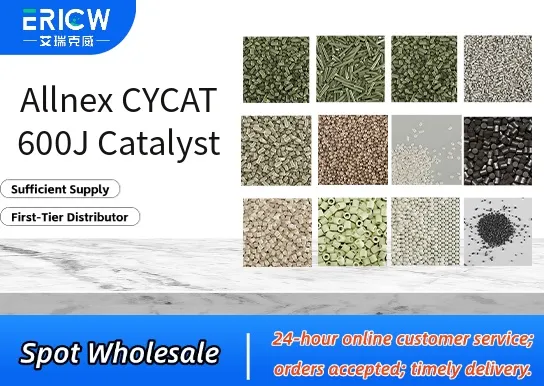
Highly efficient acid catalyst for ambient- and low-temperature curing of amino-formaldehyde resins.
Low volatility formulation minimizes odor and improves workplace safety during handling and application.
Excellent compatibility with melamine- and urea-based crosslinkers in solventborne and high-solids coatings.
Promotes rapid through-cure without excessive surface tack or premature gelation.
Stable in storage with extended shelf life under recommended conditions (unopened, cool/dry).
Automotive OEM and refinish clearcoats and basecoats.
Industrial maintenance coatings for metal substrates.
Appliance and coil coatings requiring fast line speeds and low-bake performance.
General-purpose baking enamels for metal packaging and furniture finishes.
| Chemical Type | Encapsulated para-toluenesulfonic acid (p-TSA) derivative |
| Product Form | Free-flowing white to off-white crystalline powder |
| Appearance | Crystalline solid, free of visible impurities |
| Primary Applications | Curing catalyst for amino-resin crosslinked thermoset coatings |
| Key Features | Latent reactivity, low-dust handling, controlled acid release profile |
| Benefits | Improved pot life, reduced oven energy consumption, enhanced film hardness development |
| Storage Conditions | Keep container tightly closed; store at 5–25 °C, protect from moisture |
| Regulatory Status | REACH registered; not classified as hazardous per GHS (EU) |
Q1: What is the primary function of CYCAT 600J in coating formulations?
A: CYCAT 600J is a highly active acid catalyst designed to accelerate the crosslinking reaction between melamine-formaldehyde resins and hydroxyl-functional binders—commonly used in high-performance thermosetting coatings for metal packaging, coil coating, and industrial finishes.
Q2: How does CYCAT 600J compare to traditional p-toluenesulfonic acid (pTSA) catalysts?
A: CYCAT 600J offers improved latency at ambient temperatures and more controlled reactivity during cure, reducing the risk of premature gelation in storage. It also delivers enhanced film hardness and chemical resistance compared to conventional strong acid catalysts, without requiring neutralization prior to application.
Q3: Is CYCAT 600J compatible with water-based systems?
A: While primarily developed for solvent-borne and high-solids thermoset systems, CYCAT 600J can be incorporated into certain water-reducible formulations with appropriate dispersion techniques and pH management. Compatibility should be verified experimentally due to its acidic nature and potential impact on emulsion stability.
Q4: What is the typical dosage range for CYCAT 600J in a standard baking enamel formulation?
A: Dosage is formulation-dependent, but CYCAT 600J is typically used at low concentrations—generally ranging from 0.1% to 2% by weight relative to total non-volatile content—to achieve full cure response without compromising pot life or film appearance.
Q5: Does CYCAT 600J require special handling or storage conditions?
A: Yes. As a strong organic acid catalyst, CYCAT 600J should be stored in tightly sealed containers under dry, cool conditions away from moisture, strong bases, and oxidizing agents. Standard personal protective equipment—including gloves and eye protection—is recommended during handling to prevent skin or mucous membrane irritation.
Contact With Us:
E-mail: wangxingqiang@ericwchem.com
Have a Questions? Call Us:
Add:
Building A1, Jiete Industrial Park, Huangpu District, Guangzhou City, Guangdong Province, China