English
 Español
 tiếng việt
 русский
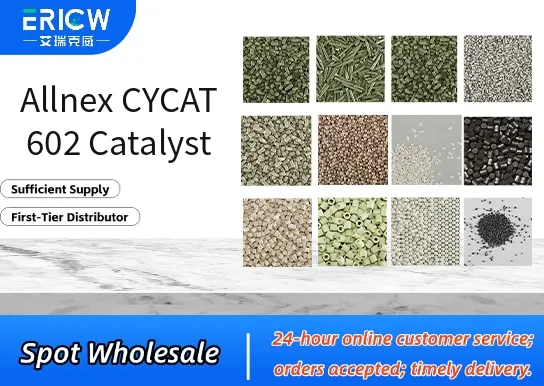
Highly efficient tin-based catalyst for urethane and esterification reactions.
Excellent storage stability with low volatility and minimal odor profile.
Consistent reactivity across varying temperature and humidity conditions.
Compatible with a broad range of polyols, isocyanates, and organic acids.
Enables precise reaction control for improved pot life and film formation.
Two-component polyurethane coatings for industrial metal finishing.
Moisture-curing polyurethane sealants and adhesives.
High-solids and low-VOC automotive refinish clearcoats.
Polyester-based coil coating systems.
Crosslinked acrylic-urethane hybrid topcoats for architectural applications.
| Chemical Type | Organotin compound (dibutyltin dilaurate derivative) |
| Product Form | Liquid |
| Appearance | Clear, pale yellow liquid |
| Primary Applications | Polyurethane coatings, sealants, and adhesives |
| Key Features | Controlled reactivity, low volatility, thermal stability |
| Benefits | Improved shelf life, reduced VOC contribution, enhanced cure uniformity |
| Storage Conditions | Store in tightly closed containers at 15–25 °C, protect from moisture |
| Regulatory Status | REACH registered; not classified as SVHC under current criteria |
Q1: What is the primary function of CYCAT 602 in coating formulations?
A: CYCAT 602 is a highly efficient acid catalyst designed to accelerate the crosslinking reaction between melamine-formaldehyde resins and hydroxyl-functional binders—such as alkyds, polyesters, and acrylics—in thermosetting coil and can coatings.
Q2: How does CYCAT 602 compare to traditional p-toluenesulfonic acid (p-TSA) catalysts?
A: CYCAT 602 offers improved latency and reduced volatility compared to p-TSA, supporting better pot life stability and lower odor during processing. It also delivers more consistent cure performance across varied baking profiles without excessive surface acidity or post-cure degradation risks.
Q3: Is CYCAT 602 suitable for food-contact compliant coatings?
A: CYCAT 602 is formulated for use in industrial coatings where regulatory compliance is determined by the full system—not individual components. Its suitability for food-contact applications depends on final formulation design, curing conditions, and adherence to applicable regional regulations; consult Allnex technical support for system-specific compliance guidance.
Q4: What is the recommended dosage range for CYCAT 602?
A: Dosage is formulation-dependent but typically ranges from 0.1% to 2.0% by weight relative to total resin solids. Optimal loading should be determined through lab-scale cure profiling to balance reactivity, film hardness, flexibility, and storage stability.
Contact With Us:
E-mail: wangxingqiang@ericwchem.com
Have a Questions? Call Us:
Add:
Building A1, Jiete Industrial Park, Huangpu District, Guangzhou City, Guangdong Province, China