English
 Español
 tiếng việt
 русский
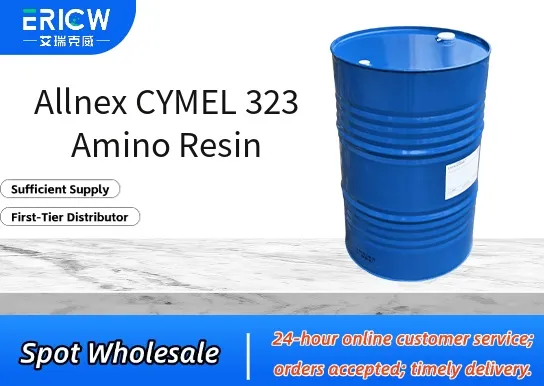
High reactivity with hydroxyl-functional resins, enabling fast cure at low temperatures.
Excellent compatibility with acrylic, polyester, and alkyd resin systems.
Provides outstanding hardness, gloss retention, and chemical resistance in cured films.
Low formaldehyde release profile, supporting compliance with stringent emission regulations.
Good storage stability under recommended conditions (unopened, cool, dry environment).
Automotive OEM topcoats and clearcoats.
Industrial maintenance and appliance coatings.
Powder coating formulations requiring rapid crosslinking.
Can and coil coating systems demanding high-throughput curing.
General-purpose high-performance decorative finishes.
| Chemical Type | Methylated melamine-formaldehyde resin |
| Product Form | Clear, low-viscosity liquid |
| Appearance | Colorless to pale yellow, transparent liquid |
| Solids Content (wt%) | 98–100% |
| Viscosity (mPa·s, 25°C) | 50–150 |
| Flash Point (°C, closed cup) | ≈120 |
| Density (g/cm³, 25°C) | 1.22–1.26 |
| Primary Applications | Crosslinker for hydroxyl-containing resins in high-performance coatings |
Q1: What is the primary function of CYMEL 323 in coating formulations?
A: CYMEL 323 functions as a highly reactive melamine-formaldehyde crosslinker, designed to enhance hardness, chemical resistance, and thermal stability in thermosetting coatings—particularly in low-bake and ambient-cure systems based on hydroxyl-functional resins such as acrylics, alkyds, or polyesters.
Q2: Is CYMEL 323 suitable for waterborne coating systems?
A: Yes, CYMEL 323 is compatible with many waterborne systems due to its good water dispersibility and low formaldehyde content. It is commonly used in water-reducible and hybrid solvent/water formulations where balanced reactivity and storage stability are required.
Q3: How does CYMEL 323 compare to other melamine crosslinkers in terms of cure speed and flexibility?
A: CYMEL 323 offers faster cure kinetics than conventional high-methylol melamines, especially at lower temperatures, while maintaining good compatibility and film flexibility. Its partial etherification provides a favorable balance between reactivity and pot life, making it well-suited for applications requiring rapid throughput without excessive brittleness.
Q4: What catalysts are typically recommended for optimal performance with CYMEL 323?
A: Acid catalysts such as p-toluenesulfonic acid (p-TSA), blocked acids, or weak organic acids are commonly used to accelerate the crosslinking reaction. Catalyst selection and dosage depend on the desired cure schedule, resin system, and final performance requirements—including minimizing acid migration or post-cure yellowing.
Contact With Us:
E-mail: wangxingqiang@ericwchem.com
Have a Questions? Call Us:
Add:
Building A1, Jiete Industrial Park, Huangpu District, Guangzhou City, Guangdong Province, China