English
 Español
 tiếng việt
 русский
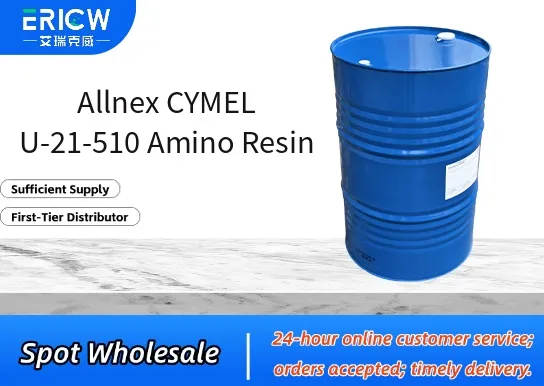
Highly reactive melamine-formaldehyde resin offering excellent crosslinking efficiency at low curing temperatures.
Low formaldehyde emission profile, supporting compliance with stringent VOC and emissions regulations.
Excellent compatibility with acrylic, polyester, and alkyd resins in solventborne and high-solids coating systems.
Provides superior hardness, chemical resistance, and gloss retention in thermoset coatings.
Stable storage life under recommended conditions (cool, dry, well-ventilated environment).
Automotive OEM and refinish topcoats requiring high durability and appearance performance.
Industrial metal coatings for appliances, furniture, and HVAC components.
Can and coil coatings where rapid cure and excellent corrosion resistance are critical.
General-purpose baking enamels for metal substrates in architectural and consumer goods applications.
High-solids industrial maintenance coatings demanding reduced energy consumption during cure.
| Chemical Type | Melamine-formaldehyde crosslinker |
| Product Form | Liquid |
| Appearance | Clear to slightly hazy, colorless to pale yellow liquid |
| Solvent Content | Approx. 60–65 wt% (proprietary blend of aromatic hydrocarbons and alcohols) |
| Non-Volatile Content | 35–40 wt% |
| Viscosity (25°C) | 100–300 mPa·s |
| Acid Number | < 5 mg KOH/g |
| Primary Applications | Baking finishes for metal substrates |
Q1: What is the primary function of CYMEL U-21-510 in coating formulations?
A: CYMEL U-21-510 is a highly reactive, low-viscosity methylated melamine-formaldehyde resin designed primarily as a crosslinker for hydroxyl- and carboxyl-functional acrylic, polyester, and alkyd resins. It enables robust thermoset network formation during baking, delivering improved hardness, chemical resistance, and gloss retention.
Q2: Is CYMEL U-21-510 compatible with acid-catalyzed systems?
A: Yes — it is specifically formulated for use with conventional p-toluenesulfonic acid (p-TSA) or blocked acid catalysts. Its reactivity profile allows for good pot life in ambient-stable formulations while enabling efficient cure at typical industrial baking temperatures (140–180 °C).
Q3: How does CYMEL U-21-510 differ from other CYMEL® resins like U-30 or 303?
A: Compared to higher-molecular-weight or more highly alkylated variants, U-21-510 offers lower viscosity and faster initial reactivity due to its optimized methylol/alkyl ether balance. This makes it especially suitable for high-solids, low-VOC coatings where flow, leveling, and early cure development are critical.
Q4: Can CYMEL U-21-510 be used in waterborne systems?
A: While traditionally employed in solventborne industrial coatings, U-21-510 may be incorporated into certain coalesced or hybrid waterborne systems — typically requiring careful pH control, compatible surfactants, and formulation-specific stability testing to ensure shelf life and film integrity.
Contact With Us:
E-mail: wangxingqiang@ericwchem.com
Have a Questions? Call Us:
Add:
Building A1, Jiete Industrial Park, Huangpu District, Guangzhou City, Guangdong Province, China