English
 Español
 tiếng việt
 русский
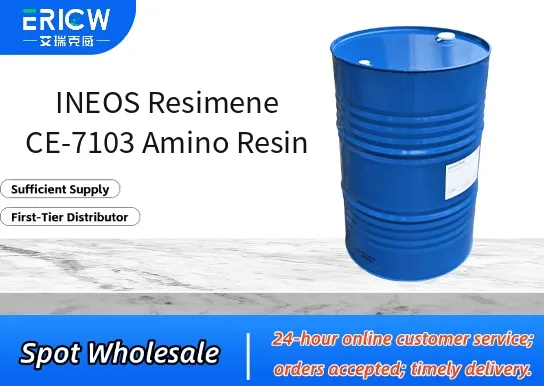
Highly reactive melamine-formaldehyde resin offering excellent crosslinking efficiency with polyester and acrylic resins.
Low free formaldehyde content, supporting compliance with stringent industrial hygiene and environmental regulations.
Excellent storage stability in acidic aqueous solution, minimizing gelation risk during handling and formulation.
Provides superior hardness, chemical resistance, and gloss retention in cured thermoset coatings.
Designed for low-bake cure profiles (140–160 °C), enabling energy-efficient manufacturing processes.
Automotive OEM and refinish topcoats requiring high durability and aesthetic performance.
Industrial maintenance coatings for metal substrates in architectural and agricultural equipment.
Appliance coatings for refrigerators, washing machines, and HVAC components.
Can coatings for food and beverage containers requiring FDA-compliant cure systems.
General-purpose coil coatings where balanced flexibility, corrosion resistance, and surface hardness are critical.
| Chemical Type | Melamine-formaldehyde condensate (partially methylolated, etherified) |
| Product Form | Clear to pale yellow viscous liquid |
| Appearance | Homogeneous, free from sediment or haze |
| Solvent Content | Approx. 65–70% by weight (methanol/butanol blend) |
| pH (10% aqueous solution) | 7.5–8.5 |
| Free Formaldehyde | < 0.3% w/w |
| Non-Volatile Content | 28–32% w/w |
| Viscosity (25 °C, Brookfield RV-DV-II+) | 150–400 mPa·s |
Q1: What is the primary function of Resimene CE-7103 in coating formulations?
A: Resimene CE-7103 is a methylated amino resin designed primarily as a crosslinking agent for thermosetting systems, especially with hydroxyl-functional acrylics, polyesters, and alkyds. It enhances cure speed, hardness, chemical resistance, and durability under thermal or ambient-cure conditions.
Q2: Is Resimene CE-7103 suitable for low-bake or ambient-cure applications?
A: Yes — CE-7103 offers good reactivity at moderate temperatures (typically 120–160 °C), and can be formulated for accelerated low-bake performance when combined with appropriate catalysts. It may also support ambient-cure systems when used with highly reactive co-resins or latent acid catalysts, though full cure development requires careful formulation optimization.
Q3: How does CE-7103 compare to other methylated melamine resins in terms of compatibility and storage stability?
A: CE-7103 is engineered for broad compatibility with common industrial resins and exhibits improved storage stability compared to highly reactive high-methylol variants. Its balanced etherification level helps minimize premature condensation while maintaining efficient crosslink density during cure.
Q4: What catalysts are typically recommended for use with Resimene CE-7103?
A: Conventional strong acid catalysts such as p-toluenesulfonic acid (p-TSA) or blocked acid catalysts (e.g., dinonylnaphthalene sulfonic acid derivatives) are commonly used. Catalyst selection should consider cure temperature, pot life requirements, and final film properties — dosage generally ranges from 0.1% to 2% by weight relative to the amino resin, depending on system reactivity and application method.
Contact With Us:
E-mail: wangxingqiang@ericwchem.com
Have a Questions? Call Us:
Add:
Building A1, Jiete Industrial Park, Huangpu District, Guangzhou City, Guangdong Province, China