English
 Español
 tiếng việt
 русский
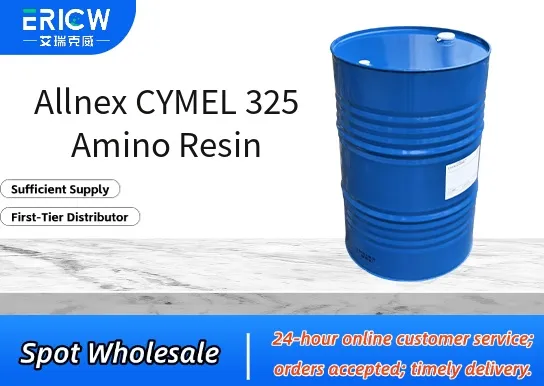
Highly reactive melamine-formaldehyde resin offering excellent cure speed at low to medium baking temperatures.
Delivers outstanding hardness, chemical resistance, and gloss retention in thermoset coatings.
Compatible with a broad range of hydroxyl-functional resins including acrylics, alkyds, and polyesters.
Provides good storage stability when formulated with appropriate acid catalysts and solvents.
Enables low-VOC formulations due to high solids content and efficient crosslinking efficiency.
Automotive OEM topcoats and clearcoats.
Industrial coil coatings for metal roofing and appliance finishes.
Can and closure coatings requiring food-contact compliance (when properly cured).
General-purpose baked enamels for metal furniture and fixtures.
Powder coating hybrid systems requiring enhanced flow and durability.
| Chemical Type | Melamine-formaldehyde crosslinker |
| Product Form | Low-viscosity liquid |
| Appearance | Clear, water-white to pale yellow liquid |
| Solids Content (wt%) | 98–100% |
| Viscosity (mPa·s, 25°C) | 50–150 |
| Density (g/cm³, 25°C) | 1.24–1.28 |
| Flash Point (°C, closed cup) | 110–120 |
| Primary Applications | Baked thermoset coatings for metal substrates |
Q1: What is the primary function of CYMEL 325 in coating formulations?
A: CYMEL 325 functions as a highly reactive melamine-formaldehyde crosslinker, designed to enhance hardness, chemical resistance, and thermal stability in thermosetting solventborne and high-solids coatings—particularly when used with polyester, acrylic, or alkyd resins.
Q2: How does CYMEL 325 differ from other CYMEL® resins like CYMEL 303 or CYMEL 1158?
A: CYMEL 325 is a partially methylated melamine resin with balanced reactivity and storage stability, offering faster cure than CYMEL 303 at moderate bake temperatures while maintaining better pot life than highly reactive variants such as CYMEL 1158. Its formulation is optimized for applications requiring a compromise between cure speed and processing window.
Q3: What catalysts are commonly recommended for use with CYMEL 325?
A: Acid catalysts—such as p-toluenesulfonic acid (p-TSA), dinonylnaphthalene disulfonic acid (DNDSSA), or blocked acid systems—are typically employed to accelerate the crosslinking reaction. Catalyst selection and dosage depend on the desired cure profile, substrate sensitivity, and formulation pH requirements.
Q4: Is CYMEL 325 suitable for low-bake or ambient-cure applications?
A: CYMEL 325 is primarily intended for forced-dry or thermal cure processes, generally ranging from 120 °C to 160 °C. While it may participate in ambient-cure systems when paired with highly active co-resins and strong catalysts, reliable performance at room temperature is not typical without significant formulation adaptation.
Q5: How should CYMEL 325 be stored to maintain optimal performance?
A: Store in tightly sealed original containers in a cool, dry, and well-ventilated area, away from direct sunlight and sources of heat or moisture. Prolonged exposure to elevated temperatures or humidity may lead to premature condensation or viscosity increase, affecting shelf life and reactivity.
Contact With Us:
E-mail: wangxingqiang@ericwchem.com
Have a Questions? Call Us:
Add:
Building A1, Jiete Industrial Park, Huangpu District, Guangzhou City, Guangdong Province, China