English
 Español
 tiếng việt
 русский
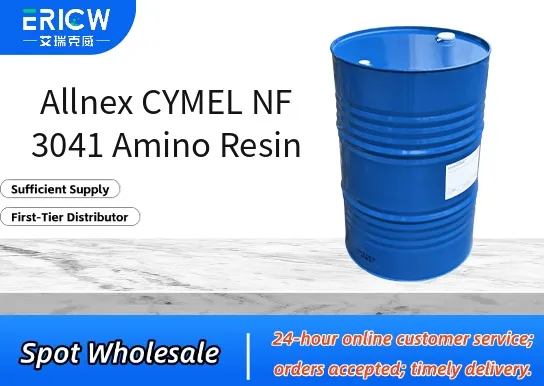
Highly reactive melamine-formaldehyde resin with low free formaldehyde content.
Excellent compatibility with acrylic, polyester, and alkyd resins in solventborne systems.
Provides outstanding hardness, chemical resistance, and gloss retention in cured films.
Enables fast cure at moderate baking temperatures (120–150 °C), improving production efficiency.
Offers good storage stability in acidic catalyzed formulations when properly inhibited.
Automotive OEM and refinish topcoats requiring high durability and appearance.
Industrial maintenance coatings for metal substrates exposed to harsh environments.
Appliance coatings (e.g., refrigerators, washing machines) demanding excellent chip resistance.
General-purpose coil coatings for pre-painted steel and aluminum.
| Chemical Type | Melamine-formaldehyde crosslinker |
| Product Form | Liquid |
| Appearance | Clear, pale yellow to light amber liquid |
| Solvent Content | Approx. 70–75 wt% in butanol/xylene blend |
| Non-Volatile Content | 25–30 wt% (at 125 °C, 60 min) |
| pH (10% solution in water) | 7.5–8.5 |
| Free Formaldehyde | <0.3 wt% |
| Key Features | Low-bake reactivity, low formaldehyde, high compatibility |
Q1: What is the primary function of CYMEL NF 3041 in coating formulations?
A: CYMEL NF 3041 serves as a low-free formaldehyde amino crosslinker, designed to enhance cure speed, hardness, chemical resistance, and thermal stability in thermosetting coatings—particularly in high-performance industrial and coil coating systems.
Q2: How does CYMEL NF 3041 differ from traditional melamine-formaldehyde resins?
A: CYMEL NF 3041 is a specially modified, non-migrating melamine-based resin with reduced free formaldehyde content and improved compatibility with acid-catalyzed acrylic and polyester systems. Its molecular design supports lower curing temperatures and better storage stability compared to conventional high-free formaldehyde analogues.
Q3: Is CYMEL NF 3041 compatible with waterborne systems?
A: Yes—CYMEL NF 3041 demonstrates good compatibility with many water-reducible and hybrid solvent/waterborne resin systems, especially when properly dispersed and stabilized. Formulators should verify compatibility and hydrolytic stability under specific pH and temperature conditions during development.
Q4: What catalysts are typically recommended for use with CYMEL NF 3041?
A: Acid catalysts such as blocked or latent p-toluenesulfonic acid (pTSA), dinonylnaphthalene sulfonic acid (DNNSA), or weak organic acids are commonly used. Catalyst selection and dosage depend on the desired cure profile, substrate type, and formulation pH—typically optimized through small-scale baking trials.
Q5: How should CYMEL NF 3041 be stored to maintain optimal performance?
A: Store in tightly sealed containers at temperatures between 10–30°C, away from direct sunlight and strong oxidizing agents. Prolonged exposure to freezing conditions or excessive heat may affect viscosity and reactivity; always inspect for clarity and homogeneity before use.
Contact With Us:
E-mail: wangxingqiang@ericwchem.com
Have a Questions? Call Us:
Add:
Building A1, Jiete Industrial Park, Huangpu District, Guangzhou City, Guangdong Province, China