English
 Español
 tiếng việt
 русский
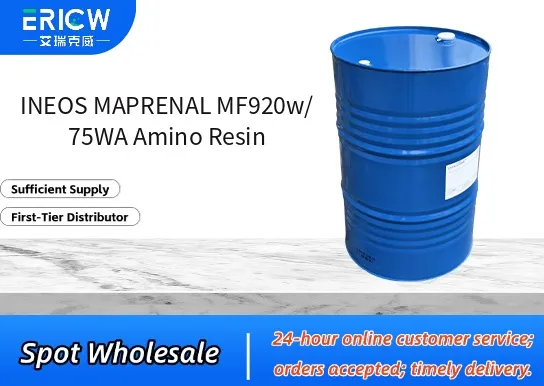
High-solids, water-reducible melamine-formaldehyde resin for low-VOC formulations.
Excellent compatibility with acrylic, polyester, and alkyd resins in coil and can coatings.
Fast cure kinetics enabling high-speed industrial baking without compromising film hardness or chemical resistance.
Outstanding gloss retention and weathering performance in exterior applications.
Low free formaldehyde content meeting stringent global regulatory requirements for industrial coatings.
Automotive OEM and refinish topcoats.
Pretreated metal coil coatings for building panels and appliances.
Metal can and closure coatings for food and beverage packaging.
Industrial maintenance coatings requiring durability and corrosion resistance.
General-purpose decorative and protective finishes on pre-coated steel and aluminum.
| Chemical Type | Melamine-formaldehyde crosslinker |
| Product Form | Clear, viscous aqueous solution |
| Appearance | Colorless to pale yellow liquid |
| Solids Content (wt%) | 74–76% |
| pH (25°C) | 8.0–9.0 |
| Viscosity (mPa·s, 25°C) | 1,200–2,000 |
| Free Formaldehyde (wt%) | ≤0.3% |
| Key Features | Water-reducible, low-VOC, fast-curing, high-gloss finish |
Q1: What is the primary function of MAPRENAL MF920w/75WA in coating formulations?
A: MAPRENAL MF920w/75WA is a water-dispersible melamine-formaldehyde resin designed as a crosslinker for ambient- or low-bake-cure aqueous systems, particularly with acrylic, polyester, or alkyd dispersions. It enhances hardness, chemical resistance, and durability while supporting low-VOC formulation goals.
Q2: Is MF920w/75WA compatible with acid-catalyzed curing systems?
A: Yes — it is formulated for use with common acidic catalysts such as p-toluenesulfonic acid (pTSA) or blocked acids. Cure speed and final film properties can be tuned by catalyst type and concentration, but compatibility testing under specific formulation conditions is recommended.
Q3: How should MF920w/75WA be incorporated into aqueous coatings?
A: It is typically added during the let-down stage under mild agitation. Pre-dilution with deionized water may aid dispersion. Avoid high-shear mixing or prolonged exposure to extreme pH (<6 or >9) to maintain colloidal stability and reactivity.
Q4: What storage conditions are recommended to ensure shelf life?
A: Store in original sealed containers at temperatures between 5 °C and 30 °C, away from freezing and direct sunlight. Prolonged exposure to temperatures above 35 °C or repeated freeze-thaw cycles may affect viscosity and colloidal integrity.
Contact With Us:
E-mail: wangxingqiang@ericwchem.com
Have a Questions? Call Us:
Add:
Building A1, Jiete Industrial Park, Huangpu District, Guangzhou City, Guangdong Province, China