English
 Español
 tiếng việt
 русский
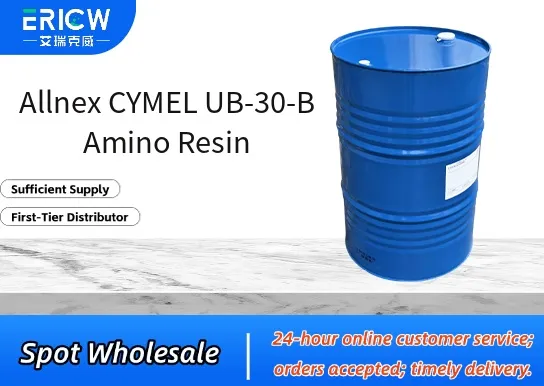
Low-viscosity, solvent-free melamine-formaldehyde resin offering excellent flow and leveling in coatings.
High reactivity with hydroxyl-functional resins (e.g., polyesters, acrylics) enabling fast cure at moderate temperatures.
Provides outstanding hardness, chemical resistance, and gloss retention in thermoset coating systems.
Designed for low formaldehyde emission profiles, supporting sustainable formulation requirements.
Excellent compatibility with a broad range of automotive and industrial base resins.
Automotive OEM clearcoats and basecoat/clearcoat systems.
Industrial maintenance and appliance coatings requiring rapid through-cure.
General-purpose coil coatings for pre-painted metal substrates.
High-performance can and closure coatings for food and beverage packaging.
Wood finishes requiring high scratch resistance and clarity.
| Chemical Type | Melamine-formaldehyde resin |
| Product Form | Liquid |
| Appearance | Clear, pale yellow liquid |
| Non-Volatile Content (wt%, 120°C, 60 min) | 98–100% |
| Viscosity (mPa·s, 25°C) | 200–400 |
| Acid Number (mg KOH/g) | < 1.0 |
| Formaldehyde Content (wt%) | < 0.3 |
| Primary Applications | Automotive, industrial, coil, can, and wood coatings |
Q1: What is the primary function of CYMEL UB-30-B in coating formulations?
A: CYMEL UB-30-B functions as a low-viscosity, highly reactive melamine-formaldehyde crosslinker, designed to enhance cure speed, hardness, and chemical resistance in thermosetting solventborne and high-solids coatings—particularly where rapid through-cure and good flow are required.
Q2: Is CYMEL UB-30-B compatible with common hydroxyl-functional resins?
A: Yes—it exhibits excellent compatibility and reactivity with standard hydroxyl-containing binders such as acrylics, polyesters, and alkyds, especially under conventional acid-catalyzed baking conditions (typically 120–160 °C).
Q3: How does CYMEL UB-30-B differ from other CYMEL® resins like UB-20 or 303?
A: Compared to UB-20, UB-30-B offers higher methylol content and lower viscosity, enabling improved solubility and faster crosslinking kinetics. Unlike fully butylated grades such as CYMEL 303, UB-30-B retains partial methylolation, delivering a balance of reactivity, storage stability, and film performance.
Q4: What catalysts are typically recommended for use with CYMEL UB-30-B?
A: Conventional strong acid catalysts—including p-toluenesulfonic acid (p-TSA), dinonylnaphthalene disulfonic acid (DNDSDA), and blocked acid systems—are commonly used. Catalyst selection and dosage depend on the desired pot life, cure schedule, and substrate sensitivity.
Q5: Does CYMEL UB-30-B require special handling or storage precautions?
A: Yes—it should be stored in tightly sealed containers at temperatures between 10–30 °C, protected from moisture and freezing. Prolonged exposure to humidity or elevated temperatures may reduce shelf life and affect reactivity due to premature condensation or formaldehyde release.
Contact With Us:
E-mail: wangxingqiang@ericwchem.com
Have a Questions? Call Us:
Add:
Building A1, Jiete Industrial Park, Huangpu District, Guangzhou City, Guangdong Province, China