English
 Español
 tiếng việt
 русский
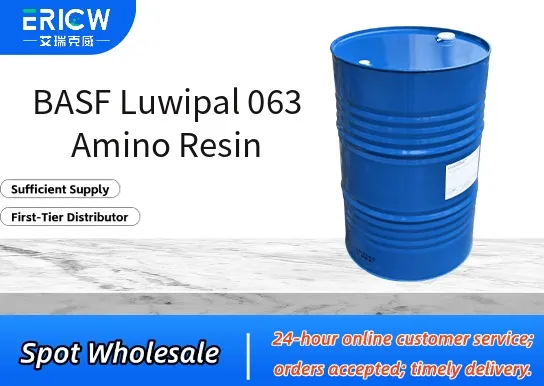
Highly reactive melamine-formaldehyde resin offering excellent crosslinking efficiency at low curing temperatures.
Low formaldehyde emission profile, supporting compliance with stringent environmental and occupational safety standards.
Outstanding compatibility with acrylic, polyester, and alkyd resins for versatile formulation flexibility.
Delivers superior hardness, chemical resistance, and gloss retention in cured coatings.
Stable aqueous solution with good storage stability under recommended conditions (5–30 °C).
Automotive OEM and refinish topcoats requiring high durability and aesthetic performance.
Industrial coil coatings for pre-painted metal substrates in construction and appliance manufacturing.
Can coatings for food and beverage containers, leveraging low migration and regulatory compliance.
Wood furniture and panel finishes where rapid cure, scratch resistance, and clarity are critical.
General-purpose decorative and protective coatings for metal and wood substrates.
| Chemical Type | Melamine-formaldehyde condensate |
| Product Form | Aqueous solution |
| Appearance | Clear to slightly hazy, colorless to pale yellow liquid |
| Solids Content | 58–62 wt% (as delivered) |
| pH (25 °C) | 7.5–8.5 |
| Viscosity (25 °C) | 100–200 mPa·s (Brookfield, spindle #3, 60 rpm) |
| Density (20 °C) | 1.18–1.22 g/cm³ |
| Primary Applications | Crosslinker for thermosetting coatings on metal, wood, and plastic substrates |
Q1: What is the primary function of Luwipal 063 in coating formulations?
A: Luwipal 063 functions as a crosslinking agent, primarily enhancing hardness, chemical resistance, and thermal stability in thermosetting acrylic, polyester, and alkyd-based coatings. It reacts with hydroxyl or carboxyl groups under heat to form a durable, three-dimensional network.
Q2: Is Luwipal 063 suitable for low-bake or ambient-cure systems?
A: Luwipal 063 is designed for medium- to high-temperature curing (typically 120–160 °C), and is not recommended for true ambient-cure applications. Catalysts such as weak organic acids may extend its reactivity at lower temperatures, but full performance requires thermal activation.
Q3: How does Luwipal 063 compare to melamine-formaldehyde resins in terms of formaldehyde release?
A: As a partially methylated amino resin, Luwipal 063 exhibits lower free formaldehyde content compared to conventional high-methylol melamine resins. Its formulation supports reduced formaldehyde emissions during cure, aligning with industrial hygiene and emissions-reduction objectives—though final levels depend on process conditions and formulation balance.
Q4: Can Luwipal 063 be used in waterborne systems?
A: Yes, Luwipal 063 is compatible with many waterborne acrylic and polyester dispersions. It offers good storage stability in properly formulated aqueous systems and contributes to film integrity without significant hydrolysis under typical handling and processing conditions.
Contact With Us:
E-mail: wangxingqiang@ericwchem.com
Have a Questions? Call Us:
Add:
Building A1, Jiete Industrial Park, Huangpu District, Guangzhou City, Guangdong Province, China