English
 Español
 tiếng việt
 русский
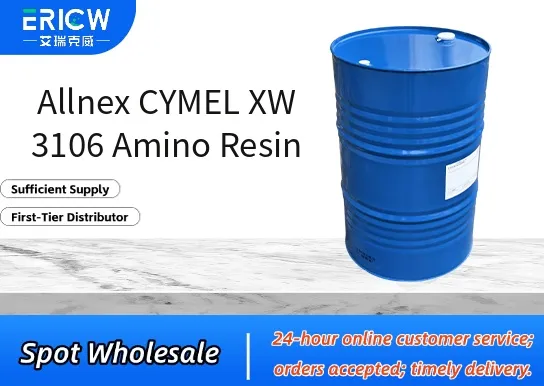
Highly reactive melamine-formaldehyde resin offering excellent cure speed at low baking temperatures.
Outstanding chemical and solvent resistance in cured film systems.
Excellent compatibility with common acrylic, polyester, and alkyd resins.
Low formaldehyde emission profile, supporting sustainable coating formulations.
Good storage stability in solvent-based systems when properly inhibited.
Automotive OEM clearcoats and basecoats.
Industrial coil coatings for architectural and appliance substrates.
Can coatings for food and beverage packaging.
General-purpose high-performance baked enamels.
Wood finishing systems requiring rapid throughput and durable finishes.
| Chemical Type | Melamine-formaldehyde crosslinker |
| Product Form | Liquid |
| Appearance | Clear to slightly hazy, colorless to pale yellow liquid |
| Solvent Content | Butanol / xylene blend |
| Non-Volatile Content (NV) | 80–84 wt% (ASTM D1209) |
| Acid Number | ≤ 5 mg KOH/g (ASTM D1639) |
| Viscosity (25°C) | 800–1,200 mPa·s (ASTM D4287) |
| Storage Stability | ≥ 6 months at 25°C in sealed container |
Q1: What is the primary function of CYMEL XW 3106 in coating formulations?
A: CYMEL XW 3106 is a highly reactive, low-viscosity melamine-formaldehyde crosslinker designed to enhance cure speed, hardness, and chemical resistance in thermosetting coatings—particularly in high-performance industrial and coil coating applications.
Q2: Is CYMEL XW 3106 compatible with hydroxyl-functional acrylics and polyesters?
A: Yes, CYMEL XW 3106 exhibits excellent compatibility and reactivity with hydroxyl-terminated resins, including acrylics, polyesters, and alkyds. Its low viscosity and balanced methylol/methoxy functionality support efficient coalescence and uniform crosslinking without excessive catalyst demand.
Q3: Does CYMEL XW 3106 require acid catalysis for optimal performance?
A: While it can undergo thermal self-condensation at elevated temperatures, CYMEL XW 3106 typically achieves efficient and controlled crosslinking in the presence of a mild acid catalyst—such as p-toluenesulfonic acid (p-TSA) or blocked catalysts—to improve pot life and reduce cure temperature.
Q4: How should CYMEL XW 3106 be stored to maintain stability?
A: Store in tightly sealed containers under cool, dry conditions (below 30 °C), away from strong acids, bases, and moisture. Prolonged exposure to humidity or elevated temperatures may lead to premature condensation or viscosity increase.
Q5: Can CYMEL XW 3106 be used in low-bake or UV-thermal hybrid curing systems?
A: Yes—it is well-suited for low-temperature cure profiles (e.g., 120–160 °C) and has been successfully integrated into hybrid systems where partial UV pre-cure is followed by thermal post-cure, enabling improved throughput and film integrity.
Contact With Us:
E-mail: wangxingqiang@ericwchem.com
Have a Questions? Call Us:
Add:
Building A1, Jiete Industrial Park, Huangpu District, Guangzhou City, Guangdong Province, China