English
 Español
 tiếng việt
 русский
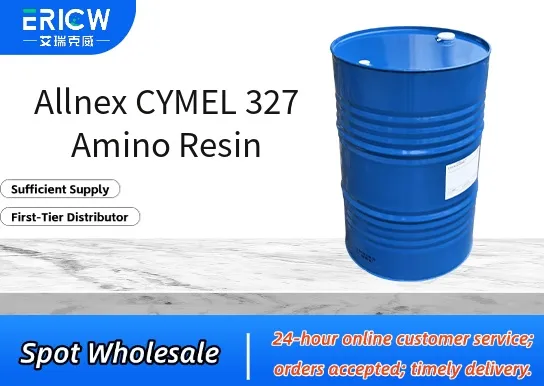
Highly reactive melamine-formaldehyde resin with excellent crosslinking efficiency at low curing temperatures.
Outstanding compatibility with acrylic, polyester, and alkyd resins in solvent-borne coating systems.
Provides superior hardness, chemical resistance, and gloss retention in thermoset coatings.
Low formaldehyde emission profile compared to conventional high-reactivity melamine resins.
Good storage stability in acidic catalyzed formulations when properly inhibited.
Automotive OEM and refinish topcoats requiring rapid cure and high durability.
Industrial maintenance coatings for metal substrates exposed to harsh environments.
Appliance coatings (e.g., refrigerators, washing machines) demanding excellent chip resistance and aesthetics.
General-purpose coil coatings where balanced reactivity and film flexibility are critical.
| Chemical Type | Melamine-formaldehyde crosslinker |
| Product Form | Liquid, solvent-borne (typically in butanol or isopropanol) |
| Appearance | Clear to slightly hazy, colorless to pale yellow liquid |
| Solids Content (wt%) | 80–85% |
| Viscosity (mPa·s, 25°C) | 150–400 |
| Acid Number (mg KOH/g) | < 1.0 |
| Density (g/cm³, 25°C) | 1.08–1.12 |
| Primary Applications | Crosslinker for high-performance thermosetting coatings |
Q1: What is the primary function of CYMEL 327 in coating formulations?
A: CYMEL 327 functions as a highly reactive melamine-formaldehyde crosslinker, designed to enhance hardness, chemical resistance, and thermal stability in thermosetting coatings—particularly in low-bake and ambient-cure systems based on hydroxyl-functional resins.
Q2: Is CYMEL 327 suitable for waterborne coating systems?
A: Yes, CYMEL 327 is formulated to offer good compatibility and storage stability in waterborne acrylic and polyester dispersions, especially when used with appropriate acid catalysts and pH control. Its low formaldehyde content and hydrolytic stability support broader formulation flexibility in aqueous environments.
Q3: How does CYMEL 327 differ from other CYMEL® resins like CYMEL 303 or CYMEL 1158?
A: CYMEL 327 features a higher degree of methylation and optimized molecular weight distribution, resulting in improved solubility in polar solvents, reduced volatility, and enhanced reactivity at lower cure temperatures compared to standard hexamethoxymethylmelamine (HMMM) types—without requiring strong acidic catalysts.
Q4: What catalysts are typically recommended for use with CYMEL 327?
A: Weak organic acids such as p-toluenesulfonic acid (p-TSA) monohydrate or blocked acid catalysts are commonly used to achieve controlled, low-temperature curing. The choice and dosage depend on the resin system, desired pot life, and cure schedule—formulators often optimize catalyst levels empirically within typical ranges of 0.1% to 2% by weight relative to total solids.
Contact With Us:
E-mail: wangxingqiang@ericwchem.com
Have a Questions? Call Us:
Add:
Building A1, Jiete Industrial Park, Huangpu District, Guangzhou City, Guangdong Province, China