English
 Español
 tiếng việt
 русский
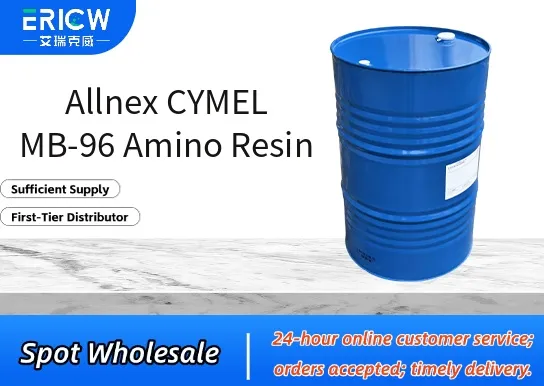
Highly reactive melamine-formaldehyde resin with excellent cure speed at low baking temperatures.
Outstanding chemical and solvent resistance in cured coatings.
Superior hardness, gloss retention, and mar resistance in thermoset film applications.
Good compatibility with acrylic, polyester, and alkyd resins for hybrid coating systems.
Low formaldehyde content, supporting compliance with stringent environmental and safety regulations.
Automotive OEM and refinish topcoats requiring high durability and appearance.
Industrial coil coatings for metal roofing, siding, and appliance panels.
Powder coating formulations where fast cure and low-temperature crosslinking are critical.
General-purpose can and container coatings for food and beverage packaging.
High-performance wood finishes for furniture and interior architectural elements.
| Chemical Type | Melamine-formaldehyde crosslinker |
| Product Form | White to off-white crystalline powder |
| Appearance | Free-flowing granular solid |
| Primary Applications | Thermosetting coatings for metal, wood, and plastic substrates |
| Key Features | Low-cure, high-reactivity, low formaldehyde emission |
| Benefits | Energy-efficient curing, enhanced film integrity, regulatory compliance |
| Storage Conditions | Store in cool, dry place below 30°C; protect from moisture |
| Shelf Life | 12 months under recommended storage conditions |
Q1: What is the primary function of CYMEL MB-96 in coating formulations?
A: CYMEL MB-96 functions as a highly reactive melamine-formaldehyde crosslinker, designed to enhance hardness, chemical resistance, and thermal stability in thermosetting solventborne and high-solids coatings—particularly for metal decorating, coil, and general industrial applications.
Q2: How does CYMEL MB-96 differ from standard high-methylated melamine resins?
A: CYMEL MB-96 features a tailored degree of methylation and controlled free formaldehyde content, offering improved compatibility with acid-catalyzed systems and enhanced storage stability compared to conventional high-methylated melamines—while maintaining rapid cure response under typical baking conditions.
Q3: Which catalysts are commonly used with CYMEL MB-96, and what should be considered during formulation?
A: Strong acid catalysts such as p-toluenesulfonic acid (p-TSA) or blocked sulfonic acids are typically employed. Catalyst selection and dosage must balance cure speed against pot life and film appearance; over-catalysis may lead to premature gelation or reduced gloss retention.
Q4: Is CYMEL MB-96 suitable for low-bake or UV-assisted curing systems?
A: While optimized for conventional thermal cure (typically 140–180 °C), CYMEL MB-96 can be incorporated into hybrid low-bake systems when paired with co-crosslinkers or photoinitiator-compatible additives—but it is not inherently UV-reactive and requires thermal energy for full network development.
Q5: What are key handling and storage recommendations for CYMEL MB-96?
A: Store in tightly sealed containers at temperatures between 10 °C and 30 °C, away from strong acids, moisture, and excessive heat. Prolonged exposure to humidity or acidic environments may cause viscosity increase or gelation; always follow good industrial hygiene practices during handling.
Contact With Us:
E-mail: wangxingqiang@ericwchem.com
Have a Questions? Call Us:
Add:
Building A1, Jiete Industrial Park, Huangpu District, Guangzhou City, Guangdong Province, China