English
 Español
 tiếng việt
 русский
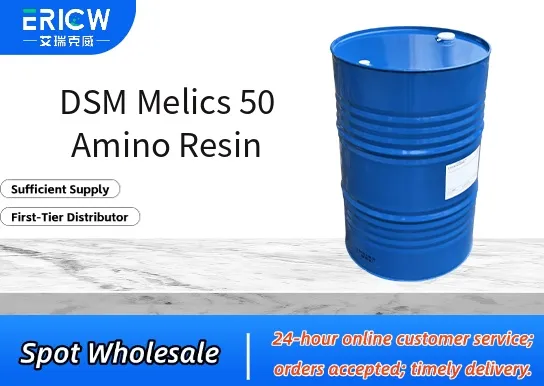
Highly reactive melamine-formaldehyde co-resin with balanced cure speed and pot life.
Excellent compatibility with polyester, alkyd, and acrylic binder systems.
Delivers superior hardness, chemical resistance, and gloss retention in cured films.
Low formaldehyde emission profile compliant with current industrial safety guidelines.
Optimized for ambient- to medium-bake curing (120–160 °C), enabling energy-efficient processing.
Automotive OEM and refinish topcoats requiring high durability and aesthetic performance.
Industrial maintenance coatings for metal furniture, appliances, and agricultural equipment.
Coil coatings for pre-painted steel used in building panels and HVAC components.
General-purpose can coatings for food and beverage containers (non-internal contact grades).
| Chemical Type | Melamine-formaldehyde co-resin (partially methylolated) |
| Product Form | Clear to pale yellow liquid |
| Appearance | Homogeneous, low-viscosity solution |
| Solvent System | Isobutanol / n-butanol blend |
| Non-Volatile Content (NV%) | 48–52% (by weight, 120 °C, 60 min) |
| Viscosity (25 °C) | 80–150 mPa·s (Brookfield RV, spindle #2, 20 rpm) |
| pH (10% in water) | 7.5–8.5 |
| Primary Applications | Crosslinker for thermosetting decorative and protective coatings |
Q1: What is the primary function of DSM Melics 50 in coating formulations?
A: DSM Melics 50 is a low-viscosity, water-compatible amino resin designed to act as a crosslinker for hydroxyl-functional resins—such as acrylics, polyesters, and alkyds—in heat-cured industrial coatings. It enhances hardness, chemical resistance, and film integrity without requiring high curing temperatures.
Q2: Is DSM Melics 50 suitable for waterborne systems?
A: Yes—DSM Melics 50 is specifically engineered for compatibility with aqueous dispersions and emulsions. Its low free formaldehyde content and good hydrolytic stability support formulation stability in waterborne industrial coatings, including coil and can coatings.
Q3: How does DSM Melics 50 compare to traditional melamine-formaldehyde resins in terms of cure profile?
A: Compared to conventional high-molecular-weight melamine resins, DSM Melics 50 offers faster through-cure at lower temperatures due to its optimized reactivity and lower steric hindrance. This enables improved energy efficiency and reduced oven dwell time in continuous curing processes.
Q4: Can DSM Melics 50 be used in food-contact coatings?
A: DSM Melics 50 is formulated to meet general requirements for indirect food-contact applications in industrial metal packaging coatings, subject to final regulatory review of the complete formulation. It is not intended for direct food-contact use without full compliance assessment by the end-user’s regulatory team.
Contact With Us:
E-mail: wangxingqiang@ericwchem.com
Have a Questions? Call Us:
Add:
Building A1, Jiete Industrial Park, Huangpu District, Guangzhou City, Guangdong Province, China