English
 Español
 tiếng việt
 русский
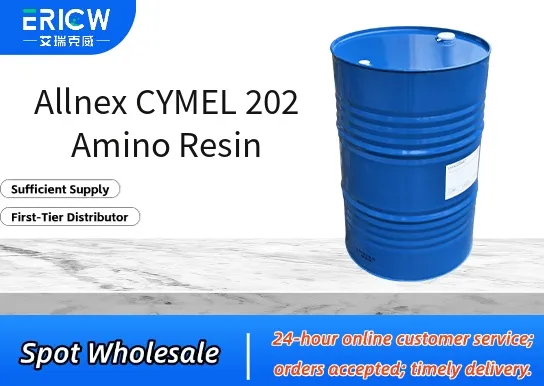
Highly reactive melamine-formaldehyde resin with excellent crosslinking efficiency at low curing temperatures.
Outstanding compatibility with acrylic, polyester, and alkyd resins in solvent-borne systems.
Provides superior hardness, chemical resistance, and gloss retention in cured coatings.
Low formaldehyde content, supporting improved workplace safety and regulatory compliance.
Good storage stability under recommended conditions (cool, dry, sealed container).
Automotive OEM and refinish topcoats requiring high durability and appearance.
Industrial maintenance coatings for metal substrates including appliances and furniture.
Can coatings for food and beverage containers where FDA-compliant formulations are used.
General-purpose coil coatings demanding rapid cure and excellent weatherability.
| Chemical Type | Melamine-formaldehyde crosslinker |
| Product Form | Clear to pale yellow liquid |
| Appearance | Homogeneous, slightly viscous liquid |
| Solvent Content | Approx. 70–75% (isobutanol/butanol blend) |
| Non-Volatile Content (NV%) | 25–28% (by weight, 120 °C, 60 min) |
| pH (10% solution in water) | 7.5–9.0 |
| Viscosity (25 °C, Brookfield RV, spindle #3, 20 rpm) | 200–600 cP |
| Key Features | Low-cure reactivity, formaldehyde scavenger compatible, broad resin compatibility |
Q1: What is the primary function of CYMEL 202 in coating formulations?
A: CYMEL 202 acts as a crosslinking agent for hydroxyl- and amide-functional resins—such as acrylics, polyesters, and alkyds—enabling thermoset film formation upon thermal curing. It contributes to improved hardness, chemical resistance, and durability in final coatings.
Q2: Is CYMEL 202 suitable for low-bake or ambient-cure systems?
A: CYMEL 202 is designed for thermal cure applications and typically requires baking temperatures above 120 °C to achieve efficient crosslinking. It is not recommended for true ambient-cure systems; for lower-temperature alternatives, consult Allnex technical support for compatible melamine derivatives with catalyzed reactivity profiles.
Q3: How should CYMEL 202 be stored to maintain stability?
A: Store in original sealed containers in a cool, dry place away from direct sunlight and sources of heat or moisture. Prolonged exposure to high humidity or elevated temperatures may lead to premature condensation or viscosity increase. Always follow good industrial hygiene practices during handling.
Q4: Can CYMEL 202 be used in waterborne coating systems?
A: Yes—CYMEL 202 is compatible with many waterborne hydroxyl-functional resin systems when properly formulated. Its solubility in common organic solvents (e.g., butanol, xylene) allows for effective incorporation into hybrid or solvent-reduced waterborne architectures, though formulation optimization—including pH control and co-solvent selection—is recommended.
Contact With Us:
E-mail: wangxingqiang@ericwchem.com
Have a Questions? Call Us:
Add:
Building A1, Jiete Industrial Park, Huangpu District, Guangzhou City, Guangdong Province, China