English
 Español
 tiếng việt
 русский
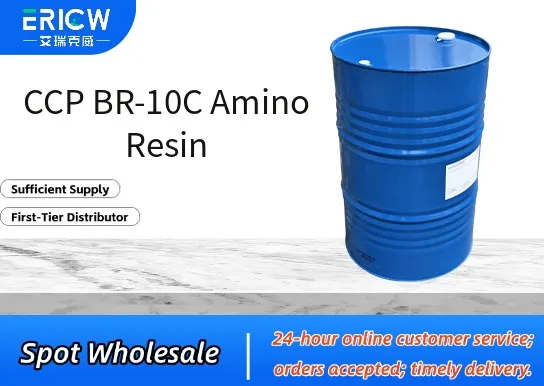
High reactivity with melamine-formaldehyde and urea-formaldehyde resins for rapid crosslinking.
Excellent compatibility with acrylic, polyester, and alkyd binder systems.
Low formaldehyde emission profile compliant with current environmental safety standards.
Enhanced thermal stability enabling efficient curing at moderate bake temperatures (140–160 °C).
Consistent batch-to-batch performance ensured by strict in-process quality control.
Automotive OEM and refinish coatings requiring high gloss and chip resistance.
Industrial coil coatings for pre-painted metal substrates.
Appliance finishes on refrigerators, washing machines, and ovens.
General-purpose can coatings for food and beverage containers.
Wood furniture and panel coatings demanding hardness and chemical resistance.
| Chemical Type | Melamine-formaldehyde condensate (highly methylolated) |
| Product Form | Clear to pale yellow liquid |
| Appearance | Homogeneous, free from sediment or haze |
| Solids Content (wt%) | 80.0 ± 1.5% |
| Viscosity (mPa·s, 25 °C) | 800–1,200 |
| pH (10% aqueous solution) | 7.8–8.5 |
| Density (g/cm³, 25 °C) | 1.22–1.26 |
| Storage Stability | ≥6 months at 5–30 °C in sealed container |
Q1: What is the primary function of CCP BR-10C in coating and ink formulations?
A: CCP BR-10C is a methylated amino resin designed to act as a crosslinking agent, enhancing hardness, chemical resistance, and thermal stability when cured with melamine- or urea-based systems. It is particularly valued for its balanced reactivity and compatibility with acrylic, polyester, and alkyd resins.
Q2: Is CCP BR-10C suitable for low-bake or ambient-cure applications?
A: While CCP BR-10C is formulated for conventional thermal curing (typically 120–160 °C), it can be adapted for lower-temperature or catalyzed ambient-cure systems when paired with appropriate acid catalysts—though full cure performance may require optimization and validation per end-use conditions.
Q3: How should CCP BR-10C be stored to maintain stability and shelf life?
A: Store in tightly sealed original containers in a cool, dry, well-ventilated area away from direct sunlight and strong oxidizers. Under recommended conditions, it typically maintains stability for up to 12 months. Avoid prolonged exposure to moisture or elevated temperatures, which may accelerate self-condensation.
Q4: Can CCP BR-10C be used in food-contact coatings?
A: CCP BR-10C is not pre-approved for direct food-contact applications. Its suitability depends on full formulation compliance with applicable regional regulatory frameworks—and requires thorough migration testing and regulatory review by the end-user’s qualified safety team.
Q5: What solvents are commonly compatible with CCP BR-10C during formulation?
A: It exhibits good solubility and stability in common organic solvents such as xylene, toluene, butyl acetate, and isopropanol. Compatibility with polar solvents like ethanol or glycol ethers should be verified experimentally, as high polarity may affect viscosity development or storage stability.
Contact With Us:
E-mail: wangxingqiang@ericwchem.com
Have a Questions? Call Us:
Add:
Building A1, Jiete Industrial Park, Huangpu District, Guangzhou City, Guangdong Province, China