English
 Español
 tiếng việt
 русский
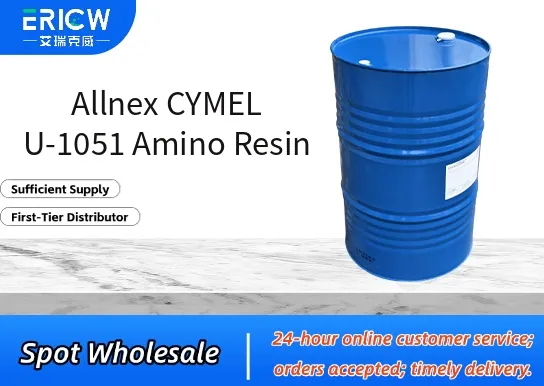
Highly reactive melamine-formaldehyde resin offering excellent cure speed at low to moderate baking temperatures.
Provides superior hardness, chemical resistance, and solvent resistance in thermoset coatings.
Compatible with a broad range of hydroxyl-functional resins including acrylics, alkyds, and polyesters.
Delivers excellent gloss retention and weathering performance in exterior applications.
Low free formaldehyde content, supporting improved workplace safety and regulatory compliance.
Automotive OEM and refinish topcoats requiring high durability and appearance.
Industrial coil coatings for metal roofing, siding, and appliance panels.
General-purpose can and container coatings for food and beverage packaging.
High-performance wood furniture and cabinet finishes.
Powder coating formulations requiring rapid cure and excellent flow properties.
| Chemical Type | Melamine-formaldehyde crosslinker |
| Product Form | Clear to pale yellow liquid |
| Appearance | Homogeneous, low-viscosity liquid |
| Primary Applications | Thermosetting coatings for metal, wood, and plastic substrates |
| Key Features | Low-bake reactivity, high functionality, low free formaldehyde |
| Benefits | Reduced energy consumption, enhanced film hardness, improved corrosion resistance |
| Solubility | Compatible with common organic solvents (e.g., xylene, butanol, esters) |
| Storage Stability | Stable for ≥6 months at 20–25°C in sealed containers |
Q1: What is the primary function of CYMEL U-1051 in coating formulations?
A: CYMEL U-1051 is a highly reactive, low-viscosity melamine-formaldehyde crosslinker designed to enhance cure speed, hardness, chemical resistance, and durability in thermosetting coatings—particularly in high-performance industrial and coil coating systems.
Q2: Is CYMEL U-1051 compatible with hydroxyl-functional acrylics and polyesters?
A: Yes, CYMEL U-1051 exhibits excellent compatibility and reactivity with common hydroxyl-bearing resins, including acrylics, polyesters, and alkyds. It is especially suited for solventborne and high-solids formulations requiring fast ambient or forced-dry cure profiles.
Q3: Does CYMEL U-1051 require an acid catalyst to cure effectively?
A: While CYMEL U-1051 can undergo thermal self-condensation at elevated temperatures, optimal cure performance—especially at lower bake temperatures—is typically achieved with a catalytic amount of a strong acid catalyst, such as p-toluenesulfonic acid (p-TSA) or blocked catalysts.
Q4: How should CYMEL U-1051 be stored to maintain stability?
A: Store in tightly sealed containers in a cool, dry place away from direct sunlight and sources of heat or moisture. Prolonged exposure to humidity or elevated temperatures may reduce shelf life and affect reactivity.
Contact With Us:
E-mail: wangxingqiang@ericwchem.com
Have a Questions? Call Us:
Add:
Building A1, Jiete Industrial Park, Huangpu District, Guangzhou City, Guangdong Province, China