English
 Español
 tiếng việt
 русский
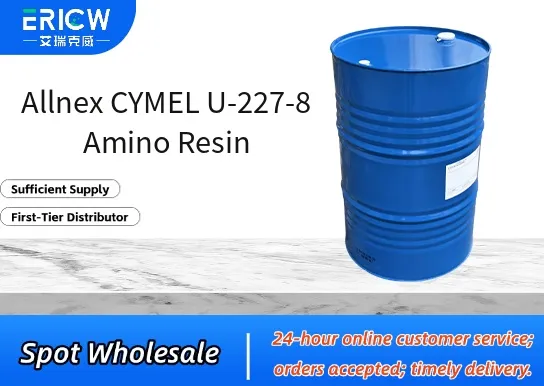
Highly reactive methylated melamine-formaldehyde resin with excellent cure speed at low to moderate baking temperatures.
Outstanding compatibility with polyester, acrylic, and alkyd resins in solvent-borne and high-solids coating systems.
Provides superior hardness, chemical resistance, and gloss retention in thermoset coatings.
Low free formaldehyde content, supporting improved workplace safety and regulatory compliance.
Good storage stability in acidic catalyzed formulations when properly inhibited.
Automotive OEM and refinish topcoats requiring rapid cure and high durability.
Industrial maintenance coatings for metal substrates, including appliances and HVAC components.
General-purpose coil coatings where balanced flexibility, corrosion resistance, and gloss are critical.
High-performance can and closure coatings for food and beverage packaging.
| Chemical Type | Methylated melamine-formaldehyde resin |
| Product Form | Liquid |
| Appearance | Clear to slightly hazy, water-white liquid |
| Non-Volatile Content (105 °C, 60 min) | 80–84 wt% |
| Viscosity (25 °C, Brookfield RV, spindle #3, 20 rpm) | 1,500–3,500 mPa·s |
| Free Formaldehyde | ≤ 0.3 wt% |
| pH (10 wt% solution in deionized water) | 7.5–9.0 |
| Primary Applications | Crosslinker for polyester-, acrylic-, and alkyd-based industrial coatings |
Q1: What is the primary function of CYMEL U-227-8 in coating formulations?
A: CYMEL U-227-8 functions as a highly reactive melamine-formaldehyde crosslinker, designed to enhance cure speed, hardness, and chemical resistance in thermosetting solventborne and high-solids coatings—particularly where low-cure-temperature performance and excellent flow/leveling are required.
Q2: Is CYMEL U-227-8 compatible with common hydroxyl-functional resins?
A: Yes—it exhibits broad compatibility with hydroxyl-containing resins such as acrylics, alkyds, polyesters, and epoxy esters. Its low viscosity and balanced reactivity support stable formulation without premature gelation under typical storage conditions.
Q3: How should CYMEL U-227-8 be handled during formulation to ensure optimal performance?
A: It is recommended to add CYMEL U-227-8 late in the let-down stage, after cooling the millbase to below 40 °C, to minimize side reactions. Acid catalysts (e.g., p-toluenesulfonic acid or blocked variants) are typically required for efficient crosslinking at baking temperatures between 120–160 °C.
Q4: Does CYMEL U-227-8 contain formaldehyde, and what are the implications for handling?
A: As a melamine-formaldehyde resin, it contains residual formaldehyde within established industry limits for amino resins. Safe handling requires adequate ventilation, personal protective equipment (gloves, eye protection), and adherence to site-specific industrial hygiene practices per local occupational health regulations.
Q5: Can CYMEL U-227-8 be used in low-VOC or high-solids systems?
A: Yes—it is specifically engineered for high-solids applications due to its low viscosity and high solids content, supporting VOC reduction strategies while maintaining robust crosslink density and film integrity after cure.
Contact With Us:
E-mail: wangxingqiang@ericwchem.com
Have a Questions? Call Us:
Add:
Building A1, Jiete Industrial Park, Huangpu District, Guangzhou City, Guangdong Province, China