English
 Español
 tiếng việt
 русский
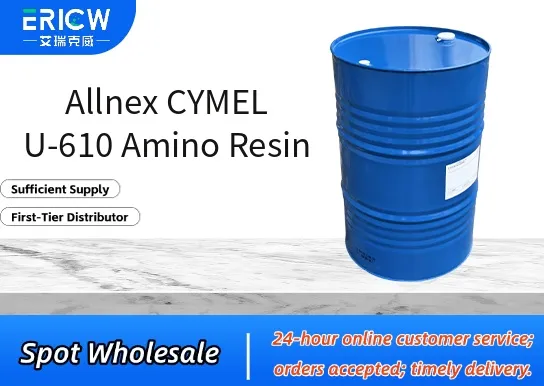
Highly reactive melamine-formaldehyde resin with excellent compatibility in solvent-based and high-solids coatings.
Offers superior crosslinking efficiency at low curing temperatures (120–150 °C), reducing energy consumption.
Delivers exceptional hardness, chemical resistance, and gloss retention in thermoset film formation.
Low free formaldehyde content, supporting compliance with stringent industrial health and safety regulations.
Excellent storage stability in acidic catalyzed systems when properly formulated.
Automotive OEM and refinish topcoats requiring high durability and aesthetic performance.
Industrial maintenance coatings for metal substrates exposed to harsh environmental conditions.
Appliance coatings on refrigerators, washing machines, and HVAC components.
Coil coatings for pre-painted metal used in construction and roofing applications.
General-purpose can coatings for food and beverage packaging (subject to regulatory approval and proper formulation).
| Chemical Type | Melamine-formaldehyde crosslinker |
| Product Form | Clear to pale yellow liquid |
| Appearance | Homogeneous, low-viscosity liquid |
| Primary Applications | Crosslinker for acrylic, polyester, and alkyd resins in thermosetting coatings |
| Key Features | Low-cure reactivity, high functionality, good compatibility |
| Benefits | Improved film hardness, enhanced chemical resistance, reduced VOC potential in high-solids systems |
| Storage Stability | ≥6 months at 25 °C in sealed container |
| Recommended Catalyst | Weak acid catalysts (e.g., p-toluenesulfonic acid, blocked acids) |
Q1: What is the primary function of CYMEL U-610 in coating formulations?
A: CYMEL U-610 functions as a highly reactive melamine-formaldehyde crosslinker, designed to enhance cure speed, hardness, chemical resistance, and thermal stability in thermosetting coatings—particularly in low-bake and ambient-cure systems.
Q2: Is CYMEL U-610 compatible with hydroxyl-functional acrylics and polyesters?
A: Yes, CYMEL U-610 exhibits excellent compatibility and reactivity with common hydroxyl-containing resins, including acrylics, polyesters, and alkyds. It is especially suited for high-solids and low-VOC formulations where efficient crosslinking at reduced temperatures is required.
Q3: How does CYMEL U-610 compare to conventional high-methylol melamines in terms of storage stability?
A: CYMEL U-610 offers improved shelf life and formulation stability due to its controlled degree of methylation and optimized molecular structure—reducing the risk of premature self-condensation while maintaining strong crosslinking performance during cure.
Q4: Can CYMEL U-610 be used in waterborne coating systems?
A: Yes, it can be incorporated into waterborne systems—typically after appropriate acid catalysis and pH adjustment—but requires careful formulation to ensure colloidal stability and avoid premature reaction with water or amine neutralizers.
Q5: What catalysts are commonly recommended for optimal cure performance with CYMEL U-610?
A: Strong organic acids such as p-toluenesulfonic acid (pTSA) or blocked acid catalysts are frequently used; selection depends on the desired pot life, cure temperature profile, and substrate sensitivity. Catalyst dosage is typically adjusted to balance reactivity and storage stability.
Contact With Us:
E-mail: wangxingqiang@ericwchem.com
Have a Questions? Call Us:
Add:
Building A1, Jiete Industrial Park, Huangpu District, Guangzhou City, Guangdong Province, China