English
 Español
 tiếng việt
 русский
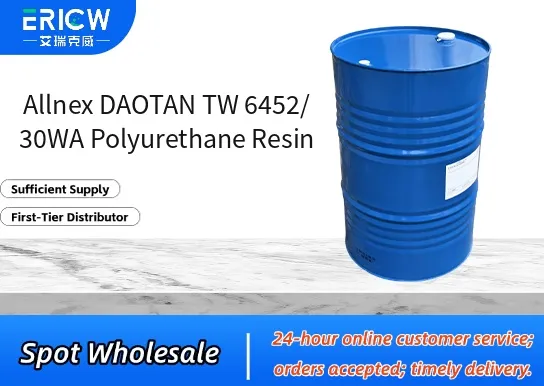
High-solids, solvent-borne aliphatic polyurethane dispersion offering excellent balance of hardness and flexibility.
Outstanding UV resistance and gloss retention for long-term exterior durability.
Good compatibility with acrylics, melamines, and other common crosslinkers in hybrid coating systems.
Low VOC formulation compliant with stringent environmental regulations (e.g., EU Solvent Emissions Directive).
Excellent substrate wetting and adhesion on plastics, metals, and pre-treated wood substrates.
Automotive refinish clearcoats and basecoat/clearcoat systems.
Industrial maintenance coatings for outdoor metal structures and equipment.
High-performance plastic coatings for automotive trim and consumer electronics housings.
Premium architectural coatings for façade elements and aluminum composite panels (ACM).
Wood finishing systems requiring high scratch resistance and weather stability.
| Chemical Type | Aliphatic polyurethane dispersion |
| Product Form | Liquid, solvent-borne |
| Appearance | Clear to slightly hazy, pale yellow liquid |
| Solids Content (wt%) | 64 ± 1% |
| Viscosity (mPa·s, 25°C, DIN 4) | 1,200 – 2,500 |
| Density (g/cm³, 20°C) | 0.98 – 1.02 |
| VOC Content (g/L) | ≤ 380 |
| Primary Applications | Topcoats requiring weather resistance, clarity, and mechanical robustness |
Q1: What is the primary function of DAOTAN TW 6452/30WA in polyurethane systems?
A: DAOTAN TW 6452/30WA is a waterborne polyurethane dispersion designed to serve as a reactive crosslinker or performance modifier—enhancing film hardness, chemical resistance, and mechanical durability without compromising flexibility or substrate adhesion.
Q2: Is DAOTAN TW 6452/30WA compatible with common waterborne acrylic or polyester dispersions?
A: Yes, it demonstrates good compatibility with a broad range of waterborne polymer dispersions—including acrylics and polyesters—enabling hybrid formulations that balance cost, performance, and regulatory compliance for industrial coatings and specialty applications.
Q3: How should DAOTAN TW 6452/30WA be incorporated into a formulation?
A: It is typically added during the let-down stage under gentle agitation, at ambient temperature. Pre-dilution with deionized water may be used to ensure uniform dispersion, and pH adjustment is generally not required unless blending with highly sensitive components.
Q4: Does this resin require post-curing or thermal activation to achieve full performance?
A: While ambient cure provides usable film properties, optimal crosslink density and chemical resistance are achieved through mild thermal conditioning—typically at temperatures between 60 °C and 90 °C for a limited duration, depending on film thickness and substrate.
Contact With Us:
E-mail: wangxingqiang@ericwchem.com
Have a Questions? Call Us:
Add:
Building A1, Jiete Industrial Park, Huangpu District, Guangzhou City, Guangdong Province, China