English
 Español
 tiếng việt
 русский
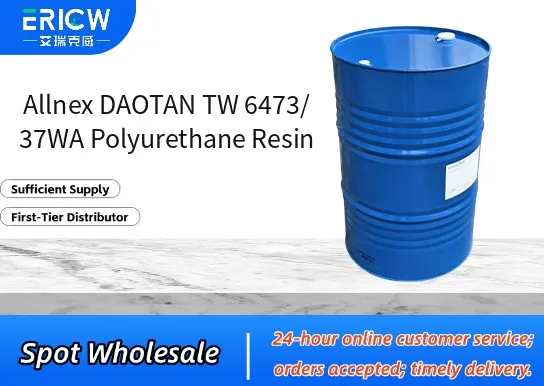
High-solids, low-VOC aliphatic polyurethane dispersion for sustainable coating formulations.
Excellent hydrolytic stability and UV resistance, ensuring long-term color and gloss retention.
Good compatibility with acrylics, cellulose derivatives, and common crosslinkers including aziridines and carbodiimides.
Optimized rheology for smooth film formation and high substrate wetting on diverse surfaces.
Enables formulation of durable, flexible coatings with balanced hardness and impact resistance.
Waterborne wood coatings for interior furniture and flooring.
Industrial maintenance coatings for metal substrates in mild environments.
Leather finishing topcoats requiring soft feel and abrasion resistance.
Plastic coatings for automotive interior trim and consumer electronics housings.
| Chemical Type | Aliphatic polyurethane dispersion |
| Product Form | Aqueous dispersion |
| Appearance | Opaque white to off-white liquid |
| Solids Content (wt%) | 37 ± 1% |
| pH | 7.5 – 8.5 |
| Viscosity (mPa·s, 25°C, Brookfield LVT, Spindle #2, 6 rpm) | 1,200 – 2,500 |
| Density (g/cm³, 25°C) | 1.02 – 1.06 |
| Minimum Film Formation Temperature (MFFT) | ≈ 15°C |
Q1: What is the primary function of DAOTAN TW 6473/37WA in polyurethane coatings and inks?
A: DAOTAN TW 6473/37WA is a water-dispersible polyurethane resin designed primarily as a film-forming binder and performance modifier. It enhances flexibility, abrasion resistance, and substrate adhesion while supporting low-VOC and waterborne formulation goals.
Q2: Is DAOTAN TW 6473/37WA compatible with common waterborne acrylic or polyester dispersions?
A: Yes, it is generally compatible with a broad range of waterborne acrylics, polyesters, and other polyurethane dispersions. Compatibility should be confirmed experimentally in the final formulation, especially when coalescing agents, surfactants, or pH modifiers are present.
Q3: How does DAOTAN TW 6473/37WA contribute to drying and film formation in ambient-cure systems?
A: As a self-crosslinking, anionic polyurethane dispersion, it forms continuous, cohesive films upon water evaporation and mild thermal activation. Film formation proceeds effectively at ambient temperatures, though accelerated curing may be achieved with gentle heat (e.g., 40–60 °C), depending on film thickness and air circulation.
Q4: Can DAOTAN TW 6473/37WA be used in flexible packaging inks requiring good rub resistance and lamination compatibility?
A: Yes — its balanced hardness/flexibility profile and excellent intercoat adhesion make it suitable for flexible packaging applications, including overprint varnishes and laminating adhesives where resistance to mechanical stress and compatibility with common lamination primers are required.
Contact With Us:
E-mail: wangxingqiang@ericwchem.com
Have a Questions? Call Us:
Add:
Building A1, Jiete Industrial Park, Huangpu District, Guangzhou City, Guangdong Province, China