English
 Español
 tiếng việt
 русский
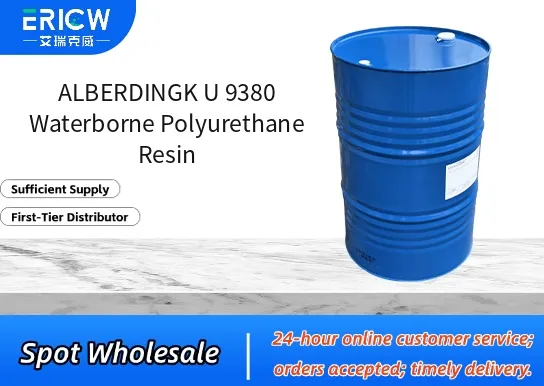
Low-VOC, environmentally compliant formulation meeting stringent global regulatory requirements.
Excellent film-forming capability with high gloss retention and superior clarity.
Outstanding resistance to water, alkalis, and mild solvents after film formation.
Good compatibility with acrylic emulsions and other waterborne systems for hybrid formulations.
Optimized rheology for easy application via spray, roller, or curtain coating methods.
High-performance waterborne wood coatings for furniture and interior joinery.
Decorative and protective topcoats for MDF and particleboard substrates.
Water-based overprint varnishes in packaging and label printing applications.
Industrial maintenance coatings for interior metal and plastic surfaces.
Basecoat-compatible clearcoats in low-bake, eco-friendly finishing systems.
| Chemical Type | Aliphatic waterborne polyurethane dispersion |
| Product Form | Opaque white liquid |
| Appearance | Homogeneous milky dispersion, free of sediment or coagulum |
| pH Value (25 °C) | 7.8 – 8.5 |
| Solids Content (wt. %) | 32 – 34 |
| Viscosity (mPa·s, Brookfield RVT, #2 spindle, 20 rpm, 23 °C) | 150 – 350 |
| Density (g/cm³, 23 °C) | 1.02 – 1.05 |
| Minimum Film Formation Temperature (MFFT) | ≥ 25 °C |
Q1: What is the primary application field for ALBERDINGK U 9380?
A: ALBERDINGK U 9380 is primarily designed as a high-performance waterborne polyurethane resin for use in premium industrial coatings, including protective topcoats for wood, metal, and plastic substrates where excellent flexibility, abrasion resistance, and low-VOC compliance are required.
Q2: Is ALBERDINGK U 9380 compatible with common waterborne acrylic or epoxy dispersions?
A: Yes, ALBERDINGK U 9380 exhibits good compatibility with many standard waterborne acrylic dispersions and modified epoxy emulsions, enabling hybrid formulations. Compatibility testing under actual processing conditions—especially regarding pH, ionic strength, and shear—is recommended before full-scale integration.
Q3: How should ALBERDINGK U 9380 be stored to maintain stability?
A: Store in original sealed containers at temperatures between 5 °C and 30 °C, away from freezing and direct sunlight. Prolonged exposure to temperatures below 5 °C may cause irreversible viscosity changes or phase separation; allow gradual equilibration to room temperature before use if chilled.
Q4: Does ALBERDINGK U 9380 require neutralization or pH adjustment prior to use?
A: ALBERDINGK U 9380 is supplied as a self-emulsified, anionically stabilized dispersion and typically does not require additional neutralization. However, formulation pH should be maintained within the range of 7.5–9.0 to ensure optimal colloidal stability and film formation performance.
Contact With Us:
E-mail: wangxingqiang@ericwchem.com
Have a Questions? Call Us:
Add:
Building A1, Jiete Industrial Park, Huangpu District, Guangzhou City, Guangdong Province, China