English
 Español
 tiếng việt
 русский
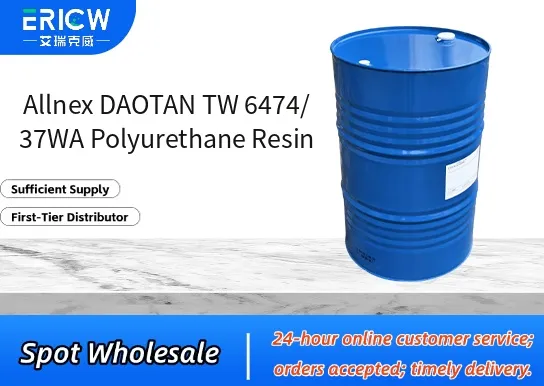
Waterborne aliphatic polyurethane dispersion offering excellent UV resistance and gloss retention.
Low VOC formulation compliant with stringent environmental regulations including EU REACH and US EPA standards.
Good film-forming properties with balanced hardness and flexibility for durable coatings.
Enhanced chemical resistance to mild acids, alkalis, and common cleaning agents.
Optimized for ambient-cure applications without requiring forced drying or high-temperature baking.
Interior architectural wall and ceiling coatings requiring low odor and rapid occupancy.
Wood finishing systems for furniture, cabinetry, and millwork where clarity and scratch resistance are critical.
Industrial maintenance coatings for metal substrates in light-duty indoor environments.
Concrete and cementitious floor coatings in commercial and institutional settings.
Coatings for decorative laminates and composite panels used in interior design applications.
| Chemical Type | Aliphatic waterborne polyurethane dispersion |
| Product Form | Liquid dispersion |
| Appearance | Opaque white to slightly bluish liquid |
| pH (at 25°C) | 7.5 – 8.5 |
| Solids Content (wt%) | 37 ± 1% |
| Viscosity (mPa·s, Brookfield RVT, Spindle #2, 20 rpm, 25°C) | 150 – 400 |
| Density (g/cm³, 25°C) | 1.02 – 1.05 |
| Minimum Film Formation Temperature (MFFT) | ≈ 10°C |
Q1: What is the primary function of DAOTAN TW 6474/37WA in polyurethane systems?
A: DAOTAN TW 6474/37WA is a waterborne polyurethane dispersion designed to serve as a reactive crosslinker or performance modifier, enhancing film hardness, chemical resistance, and mechanical durability in two-component (2K) and hybrid PU coatings.
Q2: Is DAOTAN TW 6474/37WA compatible with common aqueous polyurethane dispersions and acrylic emulsions?
A: Yes — it exhibits good compatibility with a broad range of waterborne polyurethane dispersions and acrylic emulsions, enabling formulation flexibility in hybrid binder systems for industrial and architectural coatings.
Q3: How should DAOTAN TW 6474/37WA be incorporated into a coating formulation?
A: It is typically added during the let-down stage under mild agitation. Pre-dilution with deionized water may be used to aid dispersion, and pH adjustment is generally not required unless blending with highly sensitive components.
Q4: What are the recommended storage conditions for optimal shelf life?
A: Store in tightly sealed original containers at temperatures between 5 °C and 30 °C, away from freezing and direct sunlight. Prolonged exposure to temperatures below 5 °C may cause irreversible viscosity changes or phase separation.
Contact With Us:
E-mail: wangxingqiang@ericwchem.com
Have a Questions? Call Us:
Add:
Building A1, Jiete Industrial Park, Huangpu District, Guangzhou City, Guangdong Province, China