English
 Español
 tiếng việt
 русский
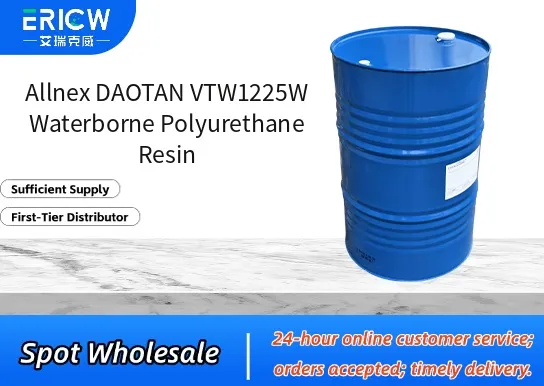
Excellent film hardness and scratch resistance for demanding topcoat applications.
Low VOC formulation compliant with stringent global environmental regulations.
Good compatibility with acrylic emulsions and other waterborne resins for hybrid systems.
Outstanding clarity and gloss retention after curing, ideal for transparent finishes.
Stable storage life (>12 months at 5–30°C) without viscosity drift or phase separation.
Waterborne wood coatings for furniture and cabinetry.
Industrial maintenance coatings for metal substrates.
High-performance floor coatings in commercial and residential settings.
Plastic coatings requiring flexibility and adhesion on ABS and PC substrates.
Leather finishing systems requiring breathability and soft hand feel.
| Chemical Type | Anionic aliphatic polyurethane dispersion |
| Product Form | White to slightly yellow translucent liquid |
| Appearance | Homogeneous aqueous dispersion |
| Solids Content (wt%) | 30.0 ± 1.0 |
| pH | 7.8 – 8.5 |
| Viscosity (mPa·s, Brookfield LVT, #2 spindle, 20 rpm, 25°C) | 150 – 400 |
| Density (g/cm³, 25°C) | 1.01 – 1.04 |
| Minimum Film Formation Temperature (MFFT) | ≤ 10°C |
Q1: What are the primary application areas for DAOTAN VTW1225W?
A: DAOTAN VTW1225W is designed for high-performance waterborne coatings requiring excellent film formation, flexibility, and chemical resistance — particularly in industrial wood finishes, plastic coatings, and overprint varnishes where low VOC content and good substrate adhesion are essential.
Q2: Is DAOTAN VTW1225W compatible with acrylic dispersions and other common waterborne resins?
A: Yes, DAOTAN VTW1225W demonstrates good compatibility with many acrylic dispersions, vinyl acetate copolymers, and other waterborne polyurethane systems, enabling formulators to tailor performance attributes such as hardness, gloss, and mar resistance through hybrid blends.
Q3: How should DAOTAN VTW1225W be stored and handled to maintain stability?
A: Store in tightly sealed containers at temperatures between 5 °C and 30 °C, away from freezing conditions and direct sunlight. Avoid prolonged exposure to high humidity or contamination with incompatible solvents or metal ions, which may affect colloidal stability.
Q4: Does DAOTAN VTW1225W require coalescing agents or additional additives for optimal film formation?
A: While DAOTAN VTW1225W exhibits good self-coalescing behavior under typical ambient curing conditions, formulation-specific requirements — such as lower minimum film formation temperature (MFFT) or enhanced flow — may benefit from small, controlled additions of approved coalescents or rheology modifiers.
Contact With Us:
E-mail: wangxingqiang@ericwchem.com
Have a Questions? Call Us:
Add:
Building A1, Jiete Industrial Park, Huangpu District, Guangzhou City, Guangdong Province, China